The Challenge of Screen Time — A Growing Concern
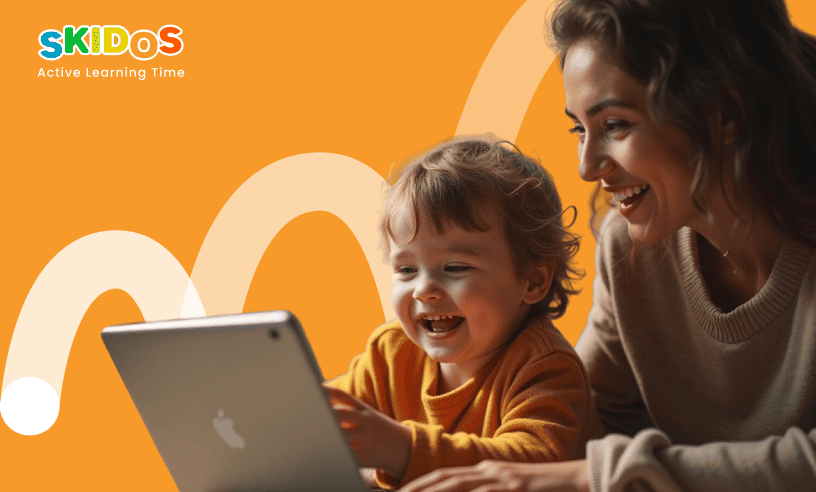
In the digital age, screens are everywhere, and young learners are more immersed in technology than ever before. According to the American Academy of Child and Adolescent Psychiatry, children aged 8–12 in the U.S. spend an average of 4–6 hours daily in front of screens, while teenagers can spend up to 9 hours. Whether it’s watching videos, scrolling through social media, or playing online games, screen time has become an integral part of daily life.
…children aged 8–12 in the U.S. spend an average of 4–6 hours daily in front of screens, while teenagers can spend up to 9 hours.’
While technology offers unquestionable advantages, such as access to information, digital literacy, and connectivity, the excessive and often unstructured use of screens has sparked concerns. Many parents and educators worry about the declining attention spans in students, as the constant arrival of digital content makes it harder for them to focus on traditional classroom settings. Mental health issues, such as anxiety and sleep disturbances, have also been linked to prolonged screen use, making it imperative to find solutions that strike a balance between digital engagement and well-being.
Instead of viewing screen time as a problem, educators and innovators are now exploring ways to repurpose it for meaningful learning experiences. This is where gamification in education comes into play, turning screens from distractions into powerful learning tools.
Gamification as a Solution
Gamification is the process of integrating game-like elements, such as rewards, levels, challenges, and interactive storytelling into non-game settings. In education, this approach has transformed traditional learning by making it more interactive, enjoyable, and effective. Instead of merely reading textbooks or listening to lectures, students engage in learning through quests, problem-solving challenges, and role-playing scenarios, which provide a sense of excitement and accomplishment.
One of the biggest advantages of gamified learning is that it captures students’ attention and motivation in ways that traditional methods often fail to do. Unlike passive learning, gamification creates active participation, where students must think critically, solve problems, and make decisions to progress. This interactive element not only enhances retention but also fosters a sense of curiosity and discovery.
Another key benefit of gamified edtech is instant feedback. Traditional learning methods often rely on delayed assessments, making it harder for students to recognize mistakes and improve. Gamification, on the other hand, provides real-time responses, allowing learners to adjust their approach immediately. Whether it’s a math puzzle, a language-learning challenge, or a history simulation, students can see their progress, identify areas for improvement, and stay engaged without the frustration of waiting for test results.
‘Gamification, on the other hand, provides real-time responses, allowing learners to adjust their approach immediately.’
Personalization is another significant advantage of gamified learning. Many edtech platforms use adaptive learning algorithms that adjust content based on the student’s pace and performance. This ensures that learners are neither overwhelmed nor under-challenged, keeping them in an optimal learning zone where they feel both motivated and capable.
Finally, gamification creates meaningful learning experiences by making learning fun, active, and relevant. This approach ensures that screen time is utilized for productive activities that promote cognitive development, motor skills, and knowledge acquisition, rather than just passive consumption of media.
Implementation Strategies
For educators looking to incorporate gamification into their classrooms, starting small can be an effective approach. Not every lesson needs a complete digital overhaul; instead, teachers can integrate simple game-based elements into their existing curriculum. For instance, turning quizzes into friendly competitions, offering achievement badges for task completion, or introducing leaderboards can make learning more dynamic and interactive. Even minor additions like these can significantly enhance student motivation and participation.
Another effective strategy is incorporating gamified edtech platforms that are designed to align with educational objectives. Tools that transform assessments into engaging challenges, integrate storytelling into subject lessons, or offer real-world simulations can make a significant impact. Digital tools that allow students to collect points, unlock new learning levels, or collaborate in team-based challenges help foster both motivation and retention.
Encouraging students to create their own educational games can also be a powerful way to reinforce learning. Platforms that support basic coding and interactive storytelling enable students to design their quizzes, puzzles, and virtual experiences. This fosters creativity, problem-solving, and collaboration, key skills in today’s digital world. When students become creators rather than just consumers, they develop a deeper understanding of concepts and take greater ownership of their learning.
Moreover, educators must ensure that gamification is used with purpose and alignment with the learning goals. Learning goals do not always need to be academically oriented. For example, preschool kids can develop their cognitive, and motor skills and acquire new knowledge using role-playing games that teach them about life using gamification.
While it is important to make lessons fun, the primary objective should always be meaningful education rather than passive entertainment. Games and challenges should be designed in ways that encourage critical thinking, problem-solving, motor skills, and real-world application of knowledge.
‘Games and challenges should be designed in ways that encourage critical thinking, problem-solving, motor skills, and real-world application of knowledge.’
Finally, educational games should also be tested in classrooms and in homeschooling to measure the impact on the student’s learning ability. This would encourage wide-scale adoption in schools and at home as it will give confidence to the educators or parents on the positive impact on each student’s skills over time.
The Future of Gamified Learning
As technology continues to evolve, the future of gamified learning holds even greater promise. Imagine students walking through ancient civilizations using virtual reality, solving real-world engineering problems in a simulated environment, or practicing foreign languages with AI-driven conversation partners. These developments will further bridge the gap between entertainment and education, making learning more engaging than ever.
Screen time is no longer a question of “if” but “how” it is used. The challenge for educators and parents is to ensure that this digital engagement is not wasted on passive consumption but is transformed into meaningful learning experiences. Gamified edtech has proven that learning does not have to be monotonous or detached from students’ interests. Instead, it can be interactive, immersive, and deeply rewarding.
References
Transforming Screen Time into Learning Time: The Role of Gamified EdTech