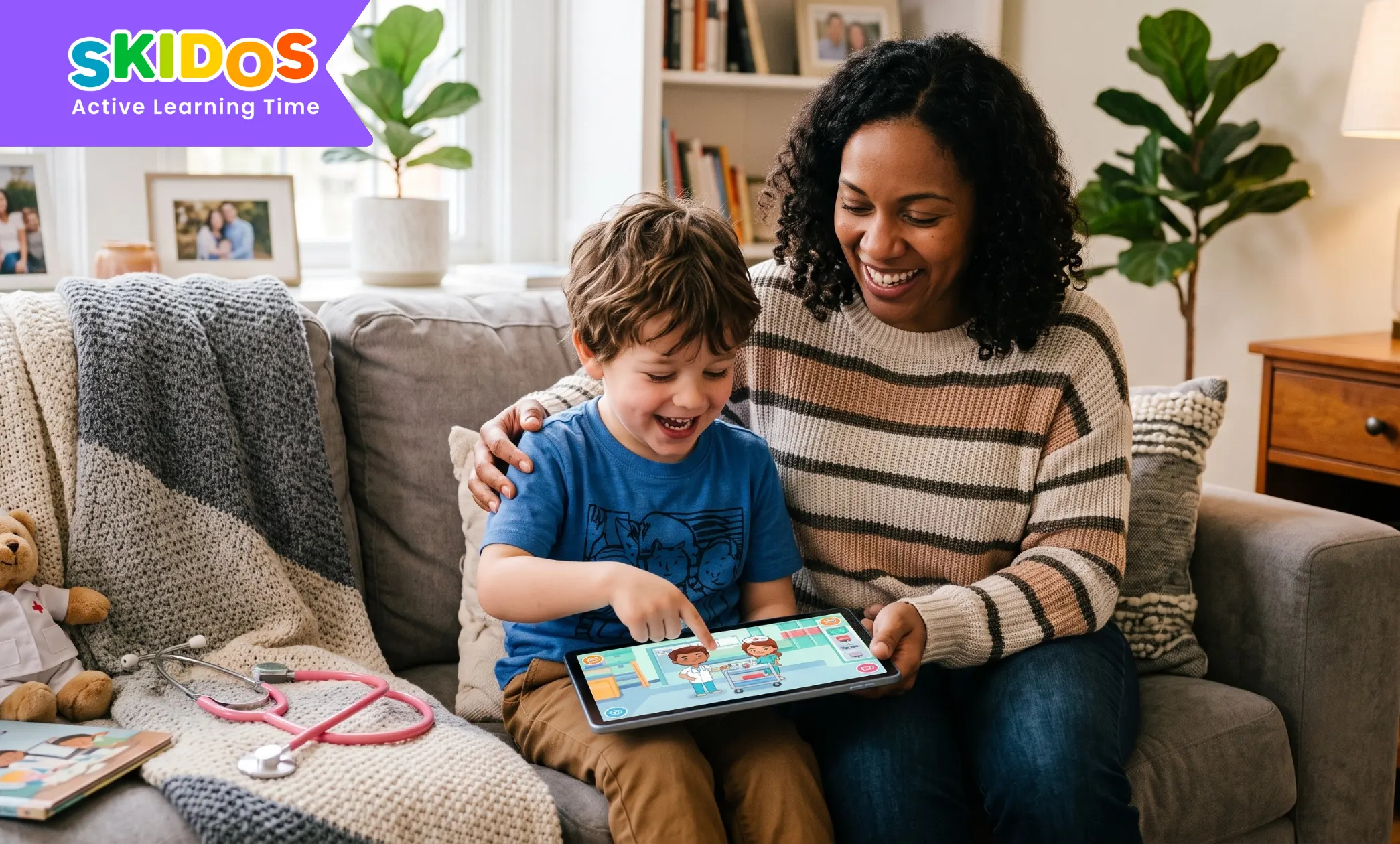
If your child tenses at the mention of a check-up, you already know the weight of doctor and hospital anxiety. Those nerves can linger for days, turning a simple visit into a family-wide stress event. Parents want more than distraction—they want playful, meaningful experiences that help kids process these fears so healthcare routines feel less scary. That’s where hospital games for kids shine, especially when they go beyond teddy-bear checkups to offer real-life hospital scenarios built with input from pediatric nurses.
What’s Inside?
- How hospital games turn doctor anxiety into familiarity and confidence
- Real-life scenarios that teach empathy for patients and families
- Key cognitive, social-emotional, and executive-function skills kids build through play
- The unique features of SKIDOS Kids Hospital Game, designed for young kids
- Practical parent tips to make hospital role-play work at home
Transforming Doctor Anxiety: Hospital Games for Kids
Hospital games for kids turn fear of the unknown into hands-on understanding. When a child steps into the role of doctor, nurse, or patient, they gain control over a scenario that once felt overwhelming. Instead of passively waiting in a waiting room, they’re making decisions, asking questions, and seeing how medical routines unfold step by step.
For early elementary children—especially ages 3–6—this kind of pretend play is a cognitive powerhouse. Kids rehearse real-world situations in a low-stakes setting, building mental scripts they can lean on during actual doctor visits. The white coat becomes familiar. The blood-pressure cuff becomes a tool they’ve “used” themselves. And that familiarity is what shrinks anxiety.
Parents often see the shift: a child who used to cry at the mention of shots might now ask to “play hospital” the night before an appointment, narrating the visit themselves. That rehearsal is part of how young brains process stress and build resilience.
Empathy Beyond Teddy-Bear Checkups: Real-Life Scenarios
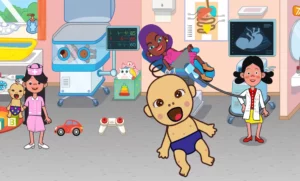
Most hospital role-play apps stop at bandaging stuffed animals. But real empathy grows when kids encounter stories that feel authentic—a family in the waiting room, a child nervous before a procedure, a nurse explaining what happens next. Those moments teach children to consider feelings beyond their own.
SKIDOS hospital games stand apart by featuring scenarios shaped with input from pediatric nurses. That means the experiences kids encounter aren’t generic; they reflect what actually happens in hospitals, from triage to discharge. Children see that patients come from all backgrounds, that emotions run high, and that healthcare workers practice patience and kindness every day.
This design choice matters. When a child sees a character who’s anxious about an X-ray, they learn that fear is normal—and that caregivers respond with calm reassurance. Over time, these stories help kids build a richer emotional vocabulary and a stronger sense of perspective-taking, both of which are key to social-emotional learning.
How Hospital Games Ease Medical Fears in Early Elementary Kids
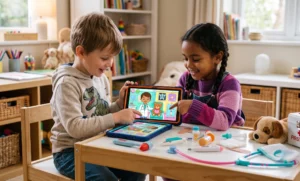
Doctor games online for early elementary kids work because they make the healthcare setting less mysterious. A child who’s never seen the inside of an exam room can feel like they’re walking into alien territory. Hospital games offer a virtual tour: here’s the waiting area, here’s where you check in, here’s what the thermometer does.
That guided familiarity lowers stress. Studies on pretend play show that children who rehearse tough scenarios through play show less anxiety when they face those situations in real life. The key is repetition: the more a child “visits” the virtual hospital, the more their brain files those routines as safe and predictable.
Games to ease doctor anxiety also let kids try different roles. Today they might play the doctor giving a checkup; tomorrow they’re the patient describing how they feel. Switching perspectives builds mental flexibility and helps children see that everyone in the healthcare system has a job to do—and that they, as patients, are part of a team working toward feeling better.
Empathy, Focus, and Growth: Key Skills Kids Build
Hospital games for kids support a wide range of skills. At the surface level, kids practice sequencing—first we wash hands, then we listen to the heartbeat, then we write notes. That’s executive function in action: planning, organizing, and following multi-step routines.
Underneath, they’re also strengthening social-emotional skills. Recognizing a character’s worry, choosing comforting words, and celebrating a successful treatment all require emotional control and empathy. Over time, these small moments of care shape how children approach friendship, conflict, and cooperation in the real world.
On the cognitive side, hospital role-play engages attention and reasoning. Kids must remember which tool does what, diagnose simple problems, and decide on next steps. That kind of focused problem-solving is exactly what researchers observed when they documented cognitive gains from casual game play—attention, logical thinking, and memory all get a workout.
Parents might not think of a hospital game as a “learning app,” but the overlap with early-elementary curriculum goals is clear: communication, collaboration, critical thinking, and creativity all come into play when a child runs their own virtual clinic.
SKIDOS Kids Hospital Game: A Unique Learning Experience
SKIDOS Kids Hospital Game is the only role-play app that centers doctor-created scenarios to help children understand patient stories and process doctor anxieties through empathetic play. Instead of generic “tap and heal” mechanics, kids engage with real-life hospital situations that reflect the variety and complexity of actual healthcare settings.
Nurse-developed narratives
Scenarios are written with input from pediatric nurses, so medical routines feel accurate and age-appropriate.
Empathy-first design
Each patient comes with a backstory, emotions, and needs, encouraging children to think beyond the task at hand.
Ages 3–6 focus
Content is built for early elementary learners, balancing challenge with comfort.
SEL integration
Every interaction supports social-emotional learning, from recognizing feelings to practicing kindness.
Cognitive scaffolding
Tasks gradually build focus, sequencing, and decision-making skills without overwhelming young players.
This isn’t pretend play for pretend play’s sake—it’s a structured learning experience that meets kids where they are and gently stretches their emotional and cognitive abilities.
Practical Tips for Parents to Support Play
You don’t need a medical degree to help your child get the most from hospital games. Start by playing together the first few times. Ask open-ended questions: “Why do you think this patient feels nervous?” or “What should the nurse do next?” Your curiosity signals that feelings and choices matter.
Connect play to real life
Before an upcoming appointment, open the game and walk through a similar scenario together. Say, “Tomorrow we’ll do something like this—let’s see what happens in the game.” That bridge from virtual to real makes the experience concrete.
Let your child lead
Once they’re comfortable, step back. Kids often narrate their own hospital stories, and listening gives you insight into what worries them. If they focus on one part of the game—say, the waiting room—that might be the piece that feels scary in real visits.
Celebrate role-switching
Encourage your child to try every role: doctor, nurse, patient, even receptionist. Each perspective builds empathy and helps them see the healthcare system as a team effort, not something being “done to” them.
Keep sessions short and positive
Young children absorb more in focused 10–15 minute bursts than in long play sessions. End on a high note—a successful treatment, a happy patient—so the emotional takeaway is confidence, not exhaustion.
FAQs
How can hospital games help children overcome doctor anxiety?
Hands-on play lets children process fears and build familiarity with medical routines, turning the unknown into something they’ve already “done” in a safe, playful setting.
What age group benefits most from hospital role-play games?
Young children, especially ages 3–6, gain the most from guided hospital scenarios because they’re at the peak window for pretend play and social-emotional learning.
Do hospital games actually teach empathy to kids?
Games with real-life scenarios and diverse characters encourage children to consider others’ feelings, building perspective-taking skills that carry over into everyday life.
Are SKIDOS hospital games safe and age-appropriate?
SKIDOS hospital games are designed with input from pediatric nurses and meet age-appropriate guidelines, so content is both medically accurate and emotionally supportive for young learners.
Can playing these games make real healthcare visits easier for kids?
Familiarity built through play helps lower anxiety and makes future doctor visits less scary, as children already know what to expect and feel more in control of the experience.
What skills do kids develop playing hospital games?
Hospital games support cognitive growth, empathy, self-control, and communication—key building blocks for both school success and healthy relationships.
Ready to Turn Doctor Visits Into Confidence?
If your child’s healthcare anxiety has been a hurdle, hospital role-play games offer a research-backed, empathy-rich path forward. Explore SKIDOS Kids Hospital Game today and discover how nurse-designed scenarios can help your child build the social-emotional skills, focus, and cognitive flexibility they need to face real-life doctor visits with calm and curiosity. When play meets purpose, fear turns into familiarity—and that’s a win for the whole family.
Sources & further reading
These trusted organizations offer more independent guidance on the topics covered above: