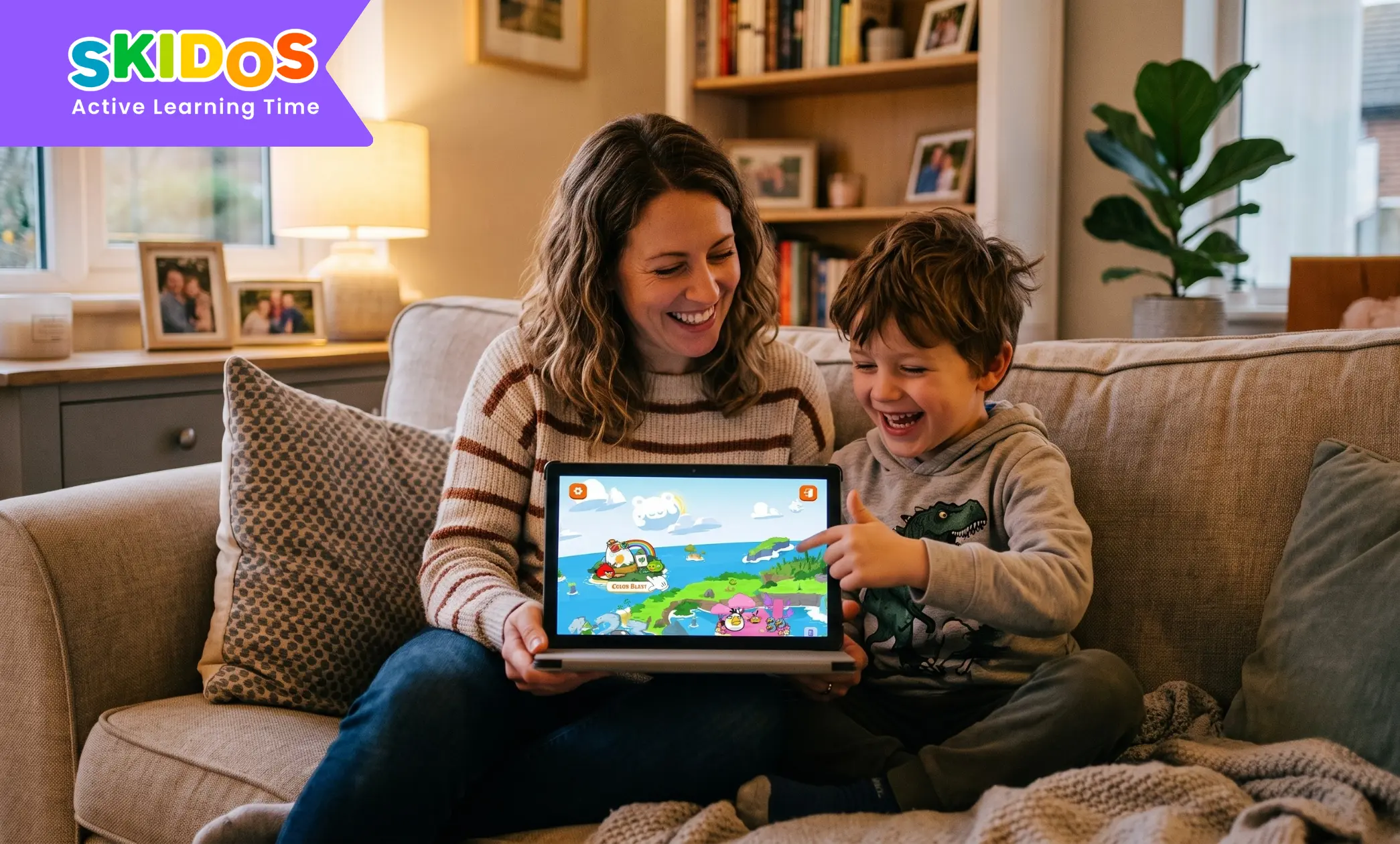
At first glance, Angry Birds looks like pure chaos—flying feathers, collapsing castles, and giggling pigs. But underneath the cheerful destruction is a stealthy lesson in life skills and basic emotions. Long before kids realize they’re practicing patience or strategic thinking, every fling of the slingshot is teaching them how to handle setbacks, adapt, and bounce back stronger.
What’s Inside?
- What kids learn from Angry Birds: resilience, frustration management, and creative thinking
- Skills Angry Birds teaches: executive function and social-emotional growth
- Educational value Angry Birds delivers: real-world problem-solving through play
- Games that build resilience in kids: SEL-focused alternatives for emotional growth
- Managing frustration with games: how the retry button builds coping skills
You want your child to develop emotional resilience and a positive mindset—skills that extend beyond academics and support their emotional health every day. What kids learn from Angry Birds goes far deeper than physics or spatial reasoning. The game quietly builds resilience, frustration management, and creative thinking—tools that help children handle challenges both on-screen and off.
Research shows that simple tasks in casual games boost kids’ attention and reasoning skills, with cognitive outcomes enhanced by game-based learning (Hedges’ g = 0.49)—that’s research-speak for “kids actually retain it.” This post breaks down the educational value Angry Birds offers, showing how a game about flinging birds strengthens real-world skills every time your child taps “retry.”
What Kids Learn from Angry Birds (Beyond STEM)
What kids learn from Angry Birds extends far beyond trajectory and gravity. Every level is a mini-lesson in persistence, strategic planning, and emotional regulation. When a structure collapses unexpectedly, your child assesses what went wrong, adjusts their approach, and tries again.
This cycle mirrors real-world problem-solving. Skills Angry Birds teaches include executive function development each time children pause to rethink their strategy, scan the structure for weak points, and decide which bird to launch next. These thinking muscles transfer directly to homework, playground disagreements, and managing disappointment.
Casual games offer a safe, low-stakes space where failure is normal. That’s crucial for development: your child learns that setbacks don’t define them, and that effort leads to progress over time.
Resilience: Bouncing Back After a Loss

The “Retry” Button as a Resilience Tool
Resilience is the ability to recover from setbacks and keep moving forward. What kids learn from Angry Birds includes essential resilience skills through the simple “retry” button. Every failed level ends with a calm invitation: try again. There’s no shame—just an immediate chance to apply what was learned.
This repetition makes failure feel normal, helping kids see mistakes as stepping stones. Games that build resilience in kids work exactly this way. Over time, children who play retry-based games show better persistence in offline tasks. They’re less likely to give up when a puzzle feels hard, or a drawing doesn’t turn out right.
Building a Growth Mindset
The educational value Angry Birds provides includes rewarding small improvements. Even a level that isn’t fully cleared often yields partial progress: one fewer pig, a higher score, a new insight. This reinforces a growth mindset—the belief that abilities improve with effort. Your child begins to see challenge as interesting rather than threatening.
Frustration Management: Turning Setbacks Into Progress

Coping Strategies in Action
Managing frustration with games is inevitable when a level feels impossible. Skills Play & Learn with Angry Birds teaches include how to manage that feeling through dozens of practice opportunities. When a child feels stuck, they have choices: launch the same bird again, switch angles, replay the level, or take a break and return later. Each choice is a lesson in self-regulation.
Parents often notice that children who play trial-and-error games become better at naming their emotions. Instead of melting down, they might say, “That didn’t work—I’ll try the yellow bird this time.” This emotional awareness is a cornerstone of social-emotional learning (SEL).
The Power of Small Wins
Play & Learn with Angry Birds structures difficulty in gentle steps. A child might fail a level three times, then succeed on the fourth—and that small victory reinforces persistence. Over time, these tiny wins build robust self-confidence: “I can figure things out if I stick with them.”
Supporting Emotional Wellbeing With Games

Not all games are created equal when it comes to emotional development. While what kids learn from Play & Learn with Angry Birds includes valuable lessons in basic emotions, games designed for social-emotional learning can take those benefits even further.
SKIDOS Emotional Well-Being games nurture kids’ empathy, resilience, and emotional growth through play scenarios that address real-world feelings and relationships. Where mainstream games might teach frustration tolerance indirectly, SEL games for kids from SKIDOS are built around social-emotional principles—helping children recognize their emotions, practice empathy, and develop coping strategies in guided, age-appropriate contexts.
For early elementary children, this targeted approach fills a gap. Your child gets engaging gameplay plus intentional practice in naming feelings, understanding others’ perspectives, and bouncing back from disappointment. It’s play that strengthens both heart and mind.
Best Angry Birds Alternatives for Emotional Growth
If you’re looking for games that build on what kids learn from Angry Birds—resilience, creative thinking, emotional regulation—here are three qualities to look for:
Games That Normalize Emotional Conversations
Look for titles that name feelings out loud (“I feel frustrated,” “That made me proud”) and model healthy responses. This clear language speeds up emotional learning and builds on the emotional benefits Angry Birds introduces.
Cooperative or Narrative-Driven Play
Games that invite teamwork or storytelling help children practice empathy and perspective-taking. They learn that other characters (and players) have needs and feelings too—deepening the social-emotional skills casual games begin to develop.
Low-Pressure, High-Reward Structures
The best SEL games for kids avoid time pressure and harsh failure. Instead, they reward curiosity, effort, and kindness—reinforcing the behaviors you want to see off-screen.
Explore SKIDOS today and find the games that fit your child. With a library designed around emotional well-being, executive function, and joyful learning, you’ll give your child the tools to navigate both big feelings and big challenges with confidence and creativity.
FAQs: What Kids Learn from Angry Birds
How can Angry Birds help kids manage emotions like frustration?
On Mood Nest Island in Play & Learn with Angry Birds, children build empathy and kindness by helping characters navigate everyday challenges—gently nurturing their self-awareness as they play.
Do kids develop creativity playing Angry Birds?
Strategic planning and trying new solutions nurture creative thinking in Angry Birds. The game’s open-ended puzzles invite different thinking styles, teaching children that multiple approaches can lead to success.
Are there educational benefits beyond STEM with Angry Birds?
The educational value Angry Birds offers includes real-world skills like resilience, persistence, and emotional regulation. While physics concepts are present, the deeper lessons are about managing setbacks, thinking flexibly, and building a growth mindset.
Can games like Angry Birds support social-emotional learning (SEL)?
Yes. By helping in-game characters navigate everyday challenges, games like Play & Learn with Angry Birds give children a fun, interactive way to practice empathy, kindness, and self-awareness.
Is Angry Birds appropriate for young children?
Its simple controls and friendly design make it engaging for early elementary ages, with positive skill development. The game’s forgiving structure and immediate retry option help young children feel capable rather than discouraged.
What are alternatives to Angry Birds that boost emotional health?
Games that build resilience in kids, like SKIDOS Play & Learn with Angry Birds, offer targeted SEL experiences. These titles provide guided practice in empathy, emotional literacy, and resilience—all wrapped in playful, age-appropriate gameplay that complements what kids learn from Angry Birds.
Sources & further reading
These reputable organisations offer further, independent guidance on the topics covered above: