If you’ve heard this phrase recently, you’re not alone. For a young child, an emotion isn’t just a feeling; it’s a physical event. It’s a racing heart, a hot face, or a “jumpy” stomach. Without the words to describe their inner experiences, children may express their feelings through meltdowns, aggression, or withdrawal.
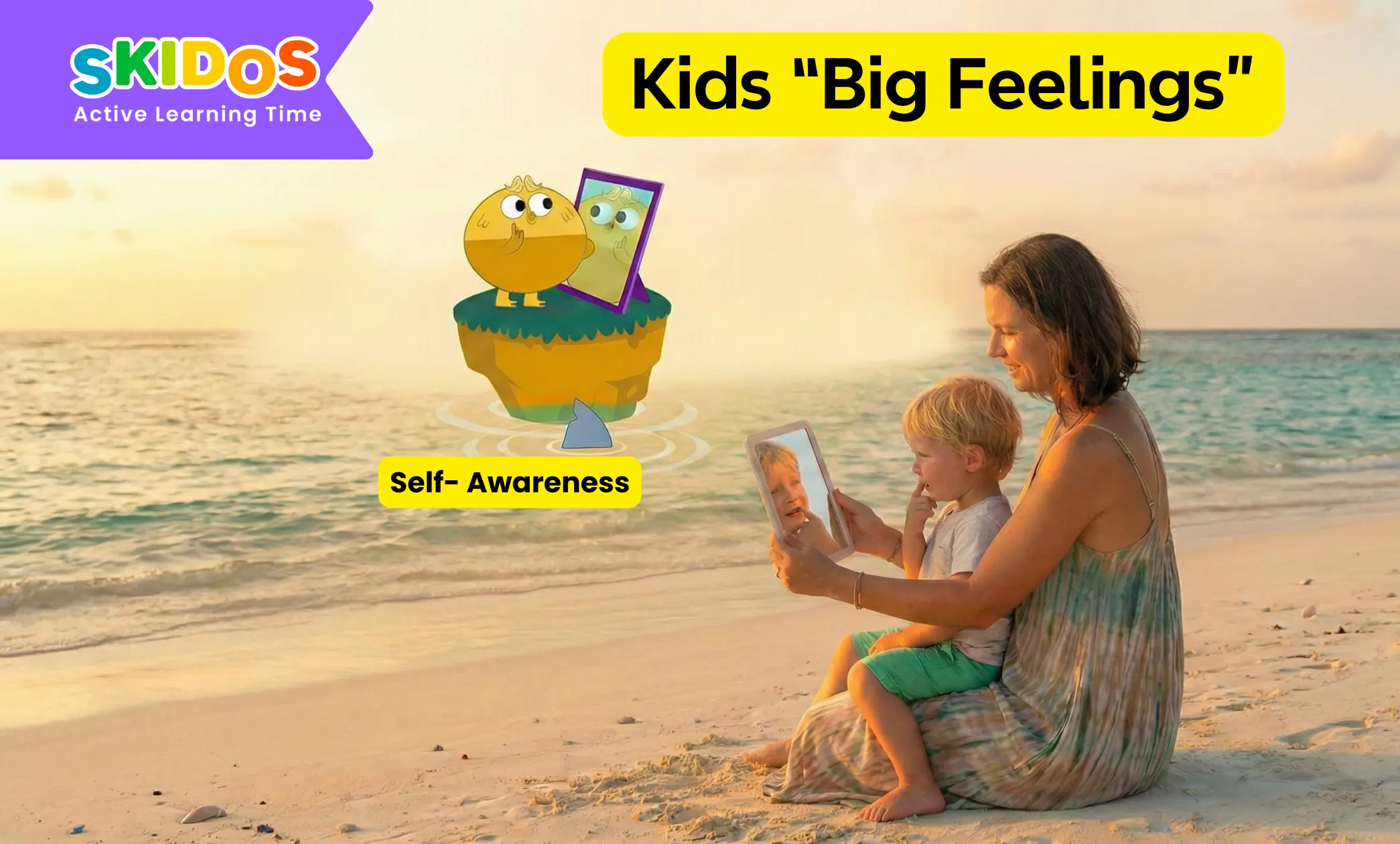
This is where Emotional Literacy comes in. It is the ability to identify and name feelings, and it is the very first step of Self-Awareness.
Why Emotional Literacy Matters
Research in Social-Emotional Learning (SEL) shows that children who can accurately name their feelings are more likely to:
- Recover faster from disappointments.
- Focus better in the classroom.
- Build stronger, more empathetic friendships.
- Develop higher “Digital Wellbeing” habits as they grow.
Teaching children the language of their feelings gives them the power to understand and handle them. As the saying goes, they have to “Name it to Tame it.”
The Solution: A Guided Path to Self-Awareness
While we know why emotional well-being is important, teaching it isn’t always easy. How do you explain emotions like “frustration” or “anticipation” to a five-year-old?
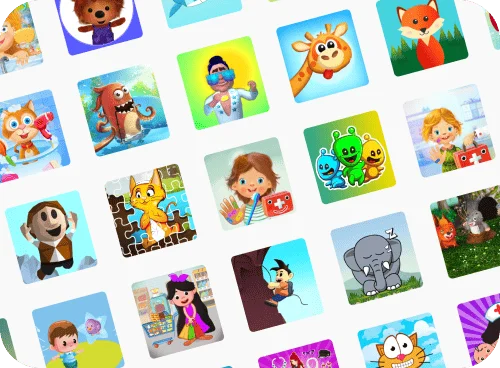
At SKIDOS, we’ve built a structured, play-based solution within our Emotional Wellbeing Curriculum. We’ve broken down the complex world of feelings into a simple, three-step learning journey located on our Self-Awareness Island.
1. Identify through Storytelling (Fun Animation)
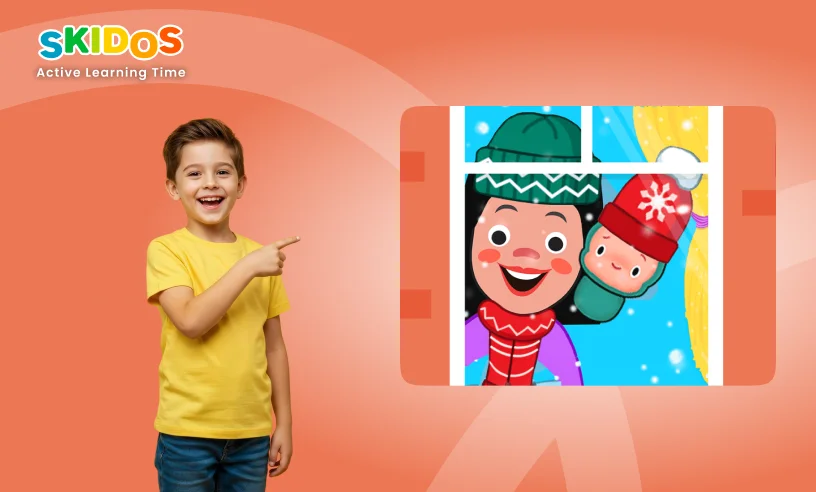
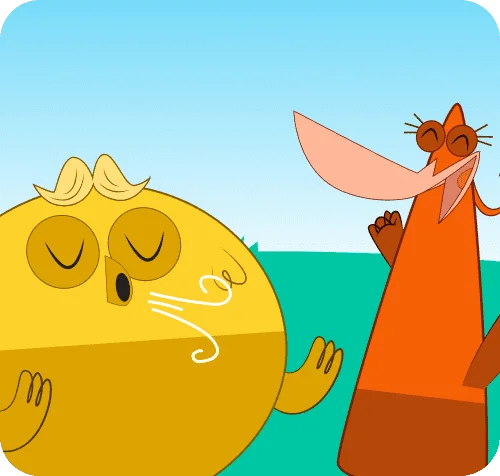
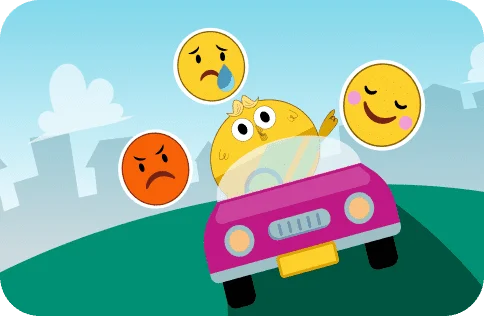
Children learn best when they can observe a situation from a safe distance. Our Fun Animations introduce characters facing relatable “big feeling” moments. As children watch playful animated characters work through challenges, they begin to recognize facial expressions and body language. These skills prepare them to understand their own emotions before a meltdown happens.
2. Practice through Play (Interactive Activities)
Once the concept is introduced, it needs to be reinforced. Our interactive activities create a “digital playground” where children explore emotions in a hands-on way. They answer comprehension questions and engage in scenarios that test their understanding of different feelings. This moves the knowledge from their “short-term memory” into a life skill they can actually use.
3. Deepen through Connection (Storytime)
Learning doesn’t have to be high-energy all the time. Our Storytime module, available directly within the SKIDOS app, provides beautifully illustrated PDFs that you can read together. This feature is designed to slow things down and spark meaningful conversation. By reading about how a character navigates their feelings, you can ask your child, “Have you ever felt like the character in this story?” It turns the app into a digital library that facilitates real-world bonding.
Bring the “Emotions” Module Home
You don’t have to be an SEL expert to raise an emotionally intelligent child. You just need the right tools.
- In the SKIDOS Learning App: Dive into Self-Awareness Island inside the “Emotional Wellbeing” module to access the Fun Animations, Interactive Activities, and the Storytime PDFs all in one place.
- On Teachers Pay Teachers (TPT): Looking for classroom resources or physical printables? Download our Emotions & Storytime Worksheet Bundle to take the lessons completely offline with guided activities.
- On YouTube: Watch the Fun Animations to introduce these concepts to your child during your next family screen-time session.
Frequently Asked Questions
My child knows the names of emotions, but they still have meltdowns. Is it working?
Yes! Naming the feeling (Self-Awareness) is the first step, but managing the feeling (Self-Management) is a separate skill that takes time. By using the SKIDOS Emotions module during family times, you are building the “mental muscle” they need to eventually use those words when they are upset.
How do I help a child who refuses to talk about their feelings?
Many kids find direct questions (“How do you feel?”) intimidating. Using characters from our Fun Animations acts as a “bridge.” It’s often easier for a child to talk about why a character is sad than why they are sad. And here, fun animated videos and storytime can be helpful.
Can an app really teach empathy and emotions?
An app is a tool, not a replacement for a parent. We designed the SKIDOS curriculum to be Interactive and Co-operative. By watching the videos or doing the TPT worksheets together, you turn technology into a shared experience that strengthens human connection.
What age is the “Emotional Wellbeing” module designed for?
Social-emotional learning continues throughout life, but this learning module is tailored for children ages 6–8. It helps them develop essential emotional language and awareness needed in preschool and early elementary school.