What parents are really looking for in 2026 is something different: meaningful screen time. Screen time that builds real skills, keeps children engaged through active participation, and gives parents peace of mind. That’s the promise of edutainment—and the best kids’ apps are finally delivering on it.
In 2026, the apps that stand out are the ones that bring together learning, creativity, and play in a single, safe place.
What Actually Makes a Free Kids’ Entertainment App Good?
Before diving into the rankings, it helps to know what separates a genuinely great kids’ app from one that just looks good in the app store. The wrong kind of app is designed to:
- Hook children into endless scrolling and passive watching
- Constantly push in-app purchases to unlock basic features
- Bombard kids and parents with ads
- Prioritize watch time over any real benefit to the child
The right kind of app does the opposite. It:
- Keeps children engaged through active participation, not passive viewing
- Offers short, satisfying sessions that don’t encourage compulsive use
- Delivers age-appropriate content that matches where your child actually is developmentally
- Is designed to limit overstimulation, not amplify it
When screen time feels purposeful and well-structured, it stops being something parents worry about and starts being something they can feel good about. That shift—from guilt to confidence—is what the best free entertainment apps for kids make possible.
The Best Free Entertainment Apps for Kids Right Now
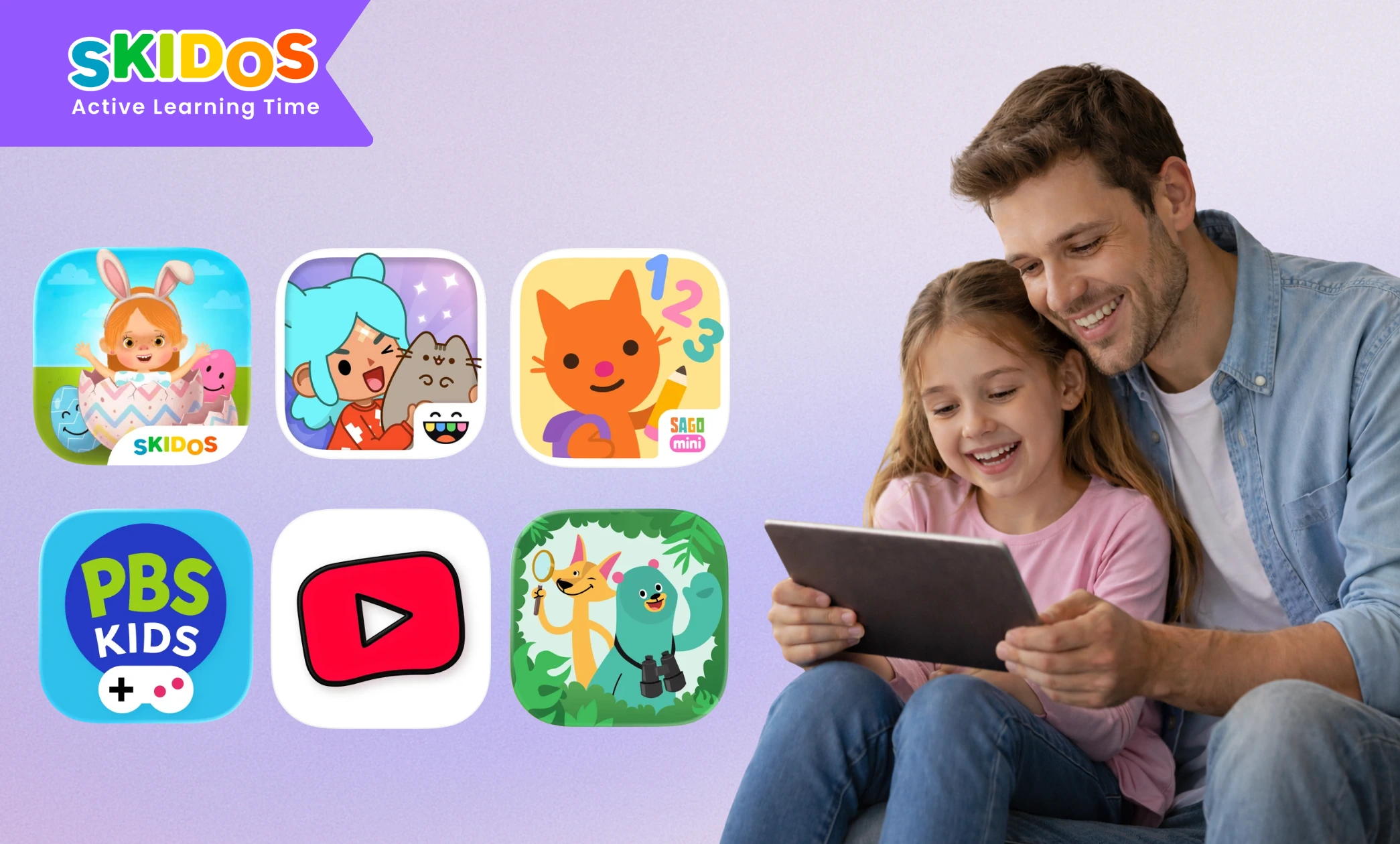
Here are the six strongest options families are turning to in 2026, ranked by overall value.
1. SKIDOS—The Best All-in-One Kids App
Best for: Ages 3–10 | Holistic development | Safe active learning
If you’re looking for one app that does it all, SKIDOS is the clear answer in 2026. Built for children aged 3 to 10, SKIDOS offers over 1,000 curriculum-aligned activities covering math, literacy, tracing, creativity, fitness, and social-emotional learning—all wrapped in a 100% kid-safe environment that contains zero ads and zero external links.
What makes SKIDOS genuinely different from other free entertainment apps for kids is the thinking behind it. Every game and activity was developed in collaboration with teachers and child development experts, which means there’s a real learning goal embedded in every moment of play. Children aren’t just being entertained—they’re building skills without realizing it. This is what active learning feels like, and it’s the heart of what makes screen time truly meaningful.
SKIDOS also takes holistic development seriously in a way most apps don’t. It covers not just math and reading but also emotional well-being, physical activity, and creative expression—giving children a genuinely well-rounded experience. And because every child learns differently, SKIDOS builds a personalized learning path for each child, adapting to their pace, interests, and ability level from the very first session.
Notably, SKIDOS is one of the very few kids’ apps built with neurodivergent children in mind. It includes dedicated content recommendations for children with ADHD, dyslexia, dyscalculia, and dysgraphia, following WCAG accessibility standards to create a calm, intuitive environment where every child can thrive.
The result is an app that has earned a 5-Star rating from the Educational App Store and the trust of families across 180+ countries—not because of flashy marketing, but because children genuinely love it and parents can see the difference it makes.
Why SKIDOS is #1 in 2026:
✅ 1,000+ curriculum-aligned activities spanning math, literacy, life skills, creativity, and fitness.
✅ One platform bringing together puzzle-based challenges, math games for kids, and creative experiences under a single kid-safe roof.
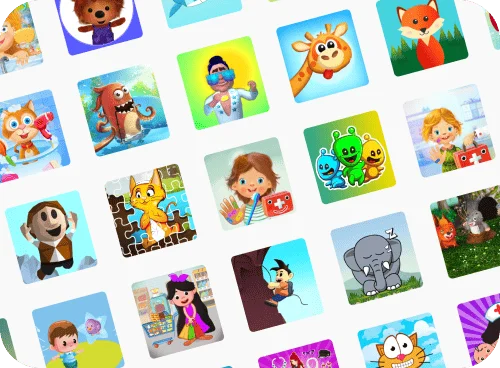
✅ Kids can enjoy games inspired by popular characters like Angry Birds: Play & Learn, Baby Shark Game, SmileyWorld® Colours, The Smurfs Playhouse, and more.
✅ Familiar video content from globally loved brands—Pinkfong (Baby Shark, Bebefinn, Dino World, K-pop), Masha & the Bear, and ChuChu TV—makes learning exciting and relatable.
✅ Social-emotional learning for kids built in—developing confidence, patience, and resilience through small wins and independent exploration.
✅ Developed with teachers and child development experts.
✅ Personalized learning paths that adapt to every child’s pace and interests.
✅ Dedicated support for neurodivergent learners—ADHD, dyslexia, dyscalculia, and dysgraphia.
✅ Trusted by families in 180+ countries with a 5-Star rating from the Educational App Store.
👉 Download SKIDOS: App Store | Google Play
2. YouTube Kids—Massive Library, Minimal Structure
Best for: Ages 4+ | Passive entertainment (with close supervision)
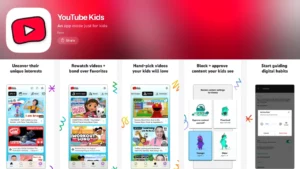
YouTube Kids is one of the most widely used free entertainment apps for kids in the world, and it’s easy to see why. The sheer volume of content—cartoons, educational videos, songs, craft tutorials, and more—means children can almost always find something they enjoy. It’s free, familiar, and requires almost no setup.
The problem is that enjoyment and benefit aren’t the same thing. YouTube Kids is built around passive viewing, which means children watch rather than participate, consume rather than create. There is no learning structure, no skill progression, and no way for parents to see what their child is actually getting from the time they spend on it. Recommendations are algorithm-driven, which means content quality varies significantly, and the platform requires constant parental supervision to use responsibly.
For families who want more than entertainment from their child’s screen time, YouTube Kids works best as an occasional treat rather than a daily go-to.
Highlights:
- An enormous library of content across every interest
- Free with no subscription required
- Easy for young children to navigate independently
Limitations:
- ❌ Entirely passive—no active learning or skill development
- ❌ Algorithm-driven content with inconsistent quality
- ❌ Designed to encourage prolonged viewing, not short, intentional sessions
- ❌ Contains ads throughout
- ❌ No progress tracking or parental insight into learning
👉 Download: App Store | Google Play
3. PBS Kids Games—Trusted Brand, Narrow Scope
Best for: Ages 3–7 | School-readiness skills
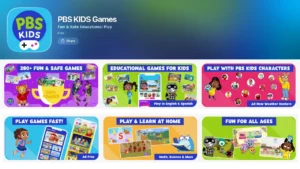
PBS Kids Games has been a go-to for parents who value curriculum-based learning for many years, and that reputation is well earned. Built around beloved PBS characters, the app delivers focused mini-games that help young children develop foundational skills in reading, math, and problem-solving. It’s simple, safe, and backed by one of the most trusted names in children’s education.
Where it falls short is breadth. The range of age-appropriate content is narrower than what all-in-one platforms offer, and there is no personalization—every child gets the same experience regardless of their level or interests. It works well as a focused supplement, but most families will eventually want something more expansive.
Highlights:
- Curriculum-aligned literacy and math games
- Safe, trusted educational environment
- Simple enough for very young children to use independently
Limitations:
- ❌ Limited content range compared to comprehensive platforms
- ❌ No personalized learning paths
- ❌ Engagement tends to drop off as children get older
👉 Download: App Store | Google Play
4. Khan Academy Kids—Academically Strong, Less Playful
Best for: Ages 2–8 | Academic reinforcement
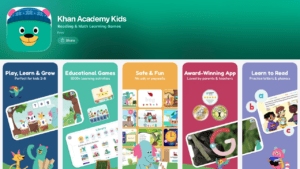
Khan Academy Kids is one of the most academically rigorous free entertainment apps for kids available today—and one of the most genuinely free, with no subscription and no ads. It covers reading, math, and logical thinking through personalized learning journeys built on the research of a globally respected nonprofit. For parents whose primary goal is academic support, it delivers.
The honest limitation is that it can feel more like a digital classroom than a play experience. Children who are motivated by academic progress tend to take to it well. Those who need the pull of fun and narrative to stay engaged often drift away. It also covers a narrower range of development areas—creativity, life skills, emotional well-being, and physical activity are largely absent. As an academic companion app, it’s excellent; as a complete solution for holistic development, it has gaps.
Highlights:
- Completely free—no subscription, no ads
- Strong academic content across reading, math, and logic
- Personalized learning journeys backed by trusted research
- Safe, child-friendly environment
Limitations:
- ❌ Academic focus means limited entertainment value
- ❌ Some children find it feels like schoolwork rather than play
- ❌ Minimal structured content for creativity, life skills, or emotional growth
- ❌ Engagement can be inconsistent for younger children
👉 Download: App Store | Google Play
5. Toca Life World—Imagination First, Learning Optional
Best for: Ages 4–9 | Creative exploration
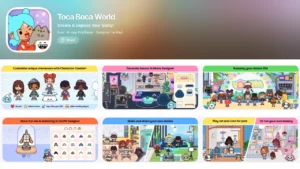
Toca Life World has built a devoted following among children who love imaginative, open-ended play. The app hands children a colorful, detailed world and lets them do whatever they like—build stories, create characters, design scenes—entirely without rules or pressure. For developing creativity and storytelling instincts, it’s one of the best tools available.
What Toca Life World doesn’t offer is any structured learning. There is no academic content, no developmental progression, and no way for parents to understand what skills their child is building. A large portion of the content also sits behind in-app purchases, making the fully free experience feel limited over time. It works best as a creative outlet used alongside a more structured learning app, rather than as a standalone solution.
Highlights:
- Genuinely open-ended play with no right or wrong answers
- Sparks imagination and independent storytelling
- Calm, child-safe environment with no external ads
Limitations:
- ❌ No learning goals or skill development built in
- ❌ No progress visibility for parents
- ❌ Core content requires in-app purchases
- ❌ Not designed to support academic or holistic development
- ❌ Heavy internal marketing
👉 Download: App Store | Google Play
6. Sago Mini World—Gentle and Safe for the Very Young
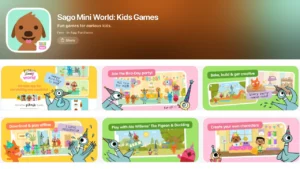
Best for: Ages 2–5
Sago Mini World is one of the most thoughtfully designed apps for toddlers and preschoolers. Its characters are friendly, its gameplay is simple, and its entire design philosophy is built around gentle exploration rather than stimulation or competition. For parents of very young children who want a calm, safe digital space, it’s a genuinely good option.
Its limitations become clear as children grow. The depth of content is limited, academic learning is minimal, and the full experience requires a subscription. It works best as a first app for very young children, before transitioning to a more comprehensive platform like SKIDOS as they get older and more ready to learn.
Highlights:
- Calm, simple design that avoids overstimulation
- Safe and ad-free environment for toddlers
- Encourages gentle exploration and imaginative play
Limitations:
- ❌ Very limited academic or developmental content
- ❌ Full experience requires a paid subscription
- ❌ Too simple for children over 5
👉 Download: App Store | Google Play
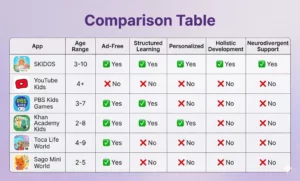
Comparison Table: Best Free Entertainment Apps for Kids (2026)
Frequently Asked Questions
Q1. What is the best free learning app for kids in 2026?
SKIDOS is the top-rated free learning app for kids in 2026. With over 1,000 curriculum-aligned activities, personalized learning paths, and support for neurodivergent children, it offers the most complete experience for children aged 3–10.
Q2. Are free kids’ apps actually safe?
Not all of them. Many free apps generate revenue through ads, in-app purchases, and data collection, which raises real safety concerns. Apps like SKIDOS and Khan Academy Kids are COPPA-certified and completely ad-free, making them genuinely safe choices for children.
Q3. How much screen time should my child have each day?
Most child development experts recommend no more than one hour of screen time per day for children aged 2–5, and consistent limits for older children. The quality of screen time matters as much as the quantity—apps that involve active participation and real learning are significantly better than passive video viewing.
Q4. What is the best app for a child with ADHD or dyslexia?
SKIDOS is one of the very few children’s apps specifically designed to support neurodivergent learners. It offers tailored content recommendations for children with ADHD, dyslexia, dyscalculia, and dysgraphia, built around WCAG accessibility standards for a calm and structured experience.
Q5. Is YouTube Kids educational?
YouTube Kids contains some educational content, but it is primarily an entertainment platform built around passive video viewing. It has no structured learning progression, no personalization, and relies on algorithm-driven recommendations that vary widely in quality. For genuinely educational screen time, dedicated learning apps like SKIDOS are a far better choice.
Q6. What free app is best for toddlers aged 2–4?
Sago Mini World is a gentle, calm option for very young children just starting out with apps. However, for toddlers who are ready to begin learning numbers, letters, shapes, and sounds in a fun and structured way, SKIDOS offers age-appropriate content starting from age 3 that grows with your child over time.
Final Thoughts: What Families Really Need in 2026
The uncomfortable truth about most free entertainment apps for kids is that “free” often comes at a hidden cost — whether that’s low-quality or repetitive content, intrusive ads, aggressive in-app purchases, or hours of passive screen time that leaves children no better off than when they started.
The families who are getting this right in 2026 aren’t just looking for something to keep their children occupied. They’re looking for apps that actively contribute to their child’s growth — building confidence, curiosity, and real skills along the way. That’s what makes certain apps the go-to choice for families who care about what their children do with their time.
If your priority is creativity, Toca Life World delivers. If you want occasional entertainment, YouTube Kids works with supervision. If academic reinforcement is the goal, Khan Academy Kids is a strong free option.
But if you want one app that genuinely covers it all — meaningful screen time that combines learning, creativity, emotional development, and fun in a kid-safe environment built by child development experts — then SKIDOS is the smartest choice you can make for your child in 2026.
👉 Try SKIDOS today at www.skidos.com