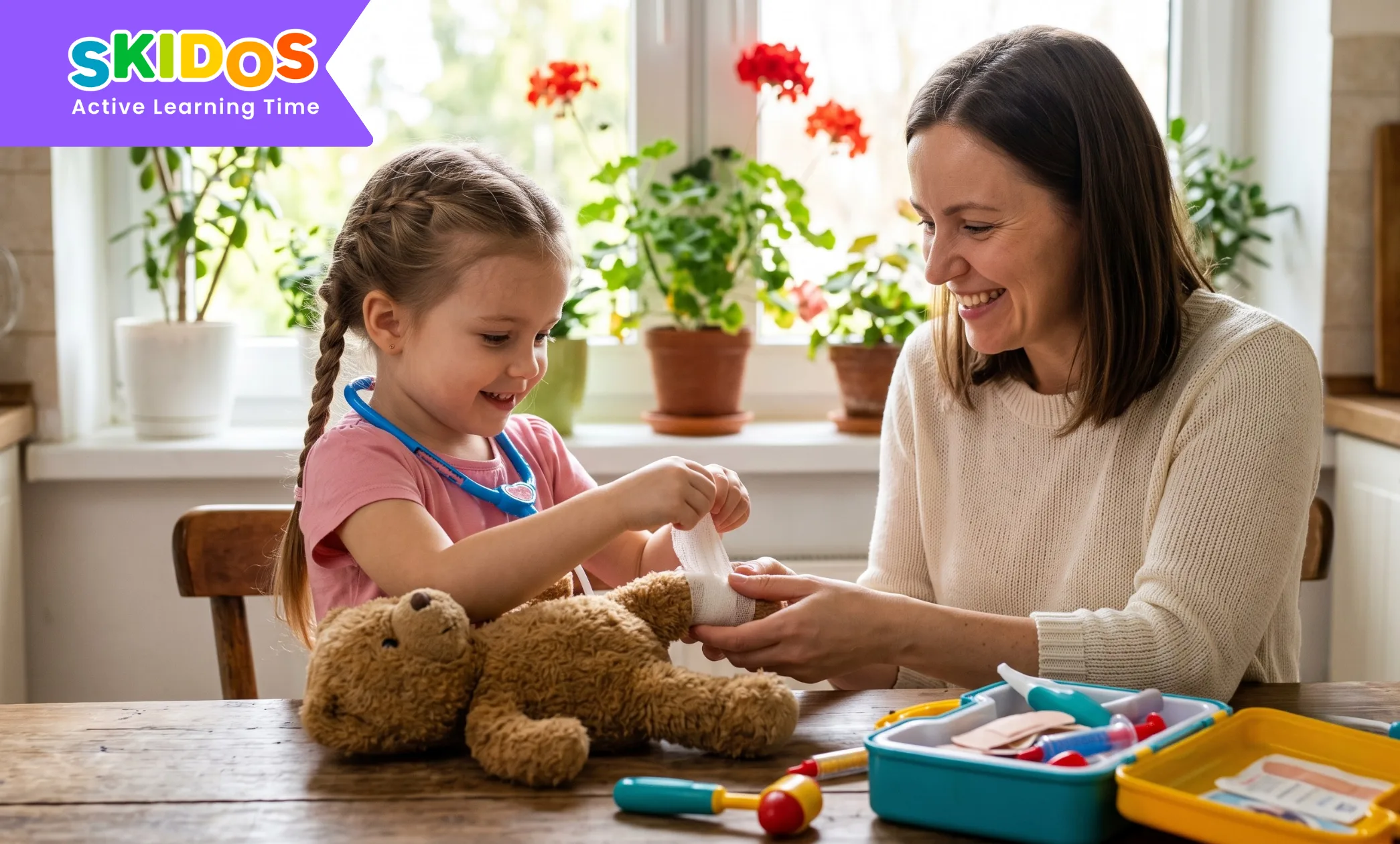
If your child hides behind your legs at the pediatrician’s office or asks worried questions before flu shot day, you’re not alone. Doctor and hospital anxiety is one of the most common childhood fears—and it can turn routine checkups into stress for the whole family. Most parents look for ways to ease that fear, but what if pretend play could do more than calm nerves? What if doctor games for kids could teach real-world first aid skills your child will use at home, at school, and beyond? That’s the promise of medical play done right: it builds empathy, problem-solving, and practical health awareness—not just temporary comfort.
What’s Inside?
- Why kids develop doctor anxiety and how pretend play helps them regain control
- How medical role-play teaches actionable first aid and strengthens thinking skills
- SKIDOS doctor games that turn health routines into empathy-building adventures
- Practical tips for making healthcare less stressful at home
- FAQs about safety, learning outcomes, and guiding your child through medical play
Why Are Kids Afraid of Doctors?
Children fear the unknown, and medical settings are full of it. Strange instruments, unfamiliar faces, sharp objects, and procedures they don’t understand can all feel threatening. Young kids haven’t yet learned to separate “short discomfort” from “real danger,” so their brains treat a stethoscope like a threat.
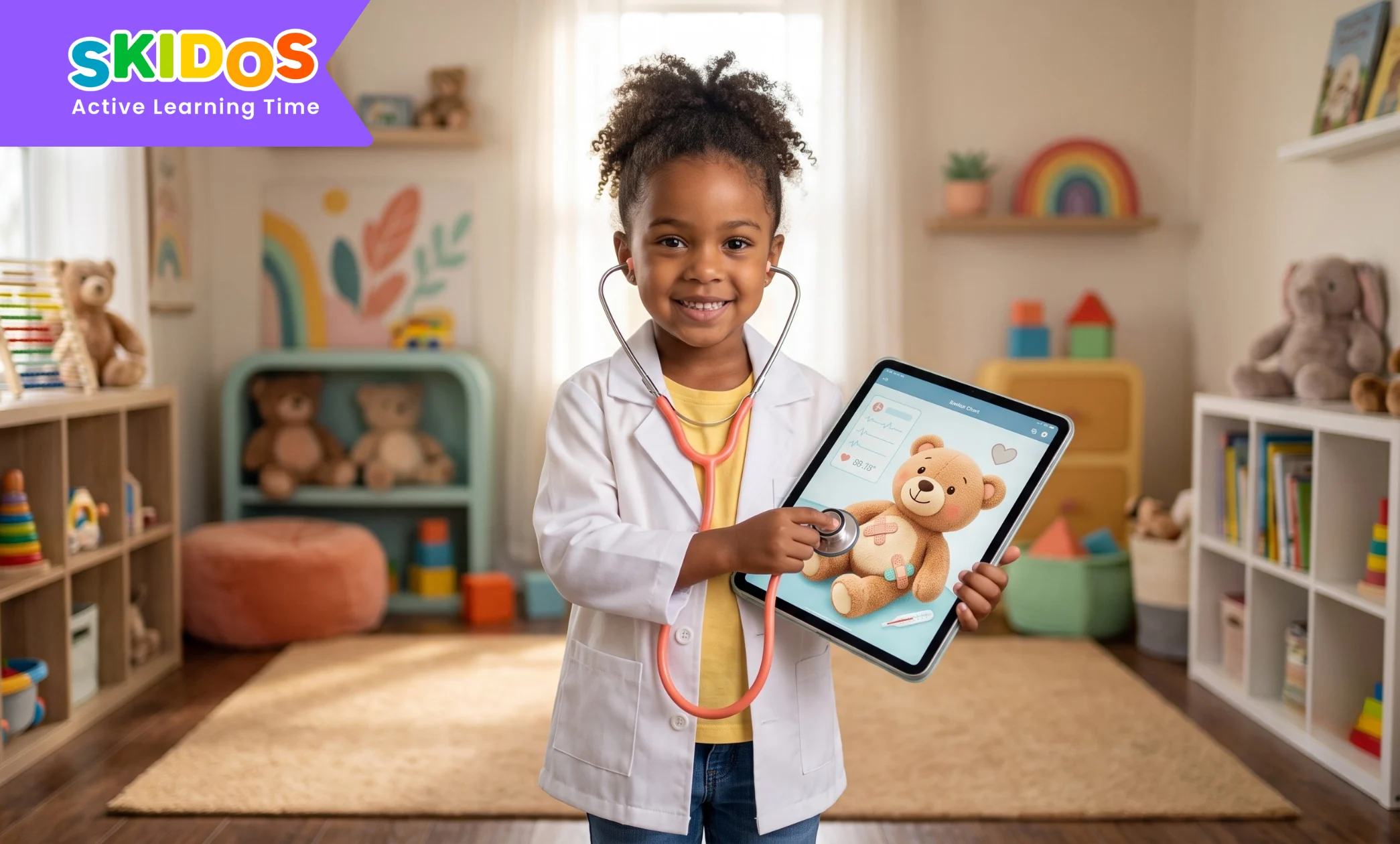
Hospital visit anxiety peaks between ages 3 and 6, when imagination is vivid but reasoning is still developing. Kids at this stage benefit most from pretend play that lets them rehearse scenarios, ask questions, and practice being the helper instead of the patient. Role-play shifts the power: suddenly they’re the ones holding the thermometer, making decisions, and bringing comfort to someone else.
How Medical Play Helps Kids Process Fear and Learn Practical Skills
Medical play goes well beyond calming nerves—it builds life skills. When your child pretends to bandage a stuffed animal or check a doll’s heartbeat, they’re not just “playing doctor”—they’re practicing empathy, learning steps (wash hands, apply bandage, check the patient), and absorbing health concepts that stick.
Research backs this up. Solving puzzles in doctor games boosts logical thinking and memory, with proven cognitive benefits (Hedges’ g = 0.46)—that’s research-speak for “kids actually retain it.” When children diagnose ailments, sort medical tools, or follow treatment steps, they’re exercising executive function and problem-solving in a low-stakes, high-engagement way.
Beyond thinking skills, medical play builds social-emotional learning. Kids learn to spot distress in others, practice gentle communication, and understand that healthcare is about helping, not hurting. These are the building blocks of empathy—and they transfer to real-world moments, from comforting a sibling with a scraped knee to cooperating during their own doctor visits.
Doctor Games That Teach First Aid and Health Awareness
The best kids’ doctor game apps go beyond sound effects—they teach real first aid steps. Look for apps that let children practice cleaning a wound, applying a bandage correctly, recognizing when to call for adult help, and understanding basic hygiene like handwashing.
SKIDOS Doctor Games for Kids offers exactly this blend of imaginative role-play and real-world learning. Kids step into the shoes of a caregiver, diagnosing patients, picking the right tools, and following treatment steps. These interactive pretend play experiences build empathy, cognitive skills, and health awareness for children aged 3–8—turning screen time into skill-building time.
Unlike passive videos, these games require decision-making: Which tool should I use? What does this symptom mean? How do I make my patient feel better? Every choice builds problem-solving and helps kids absorb the logic of healthcare. When they face a real scraped knee or upset tummy, they have a mental framework to lean on.
SKIDOS Doctor Games: Real-World Learning Through Play
Smurfs Doctor Game for Kids
One standout example is the Smurfs Doctor Game for Kids, an empathy-building adventure where children care for magical Smurfs patients in a whimsical village clinic. Kids diagnose ailments, bandage injuries, and soothe worried Smurfs—all while learning health awareness and sharpening problem-solving skills.
What makes this game special is its emotional teaching: each Smurf patient expresses feelings (nervousness, relief, gratitude), teaching kids to read social cues and respond with care. The game gently introduces medical vocabulary—thermometer, stethoscope, prescription—in context, so kids absorb terms naturally rather than through flashcards.
Parents love that the Smurfs Doctor Game keeps kids engaged for 15–20 minutes of focused play. It’s a perfect bridge between pure imagination and practical learning: your child gets the magic and story they crave, and they walk away knowing how to check a pulse or why rest matters when you’re sick.
Making Healthcare Routines Fun & Stress-Free at Home
Once your child has practiced medical scenarios through play, you can carry that confidence into real life. Here are a few ways to make healthcare routines less scary:
Role-reverse before appointments. Let your child “examine” you with a toy stethoscope or flashlight. Describe what the doctor will do (“First she’ll listen to your heartbeat—just like you’re doing now!”), So there are no surprises.
Create a first-aid kit together. Stock it with kid-friendly supplies—Band-Aids, gauze, a small bottle of saline—and let your child “treat” minor scrapes at home. Practicing bandaging reinforces the steps they’ve learned in doctor games and builds confidence.
Use honest language. Instead of saying “This won’t hurt,” say “You might feel a quick pinch, then it’s done—just like when we pretended to give the teddy bear a shot.” Concrete language reduces fear more than false promises.
Celebrate small wins. After a successful checkup or a calm at-home treatment, recognize your child’s bravery and new skills. “You stayed so still while the doctor listened to your lungs—just like a real healthcare helper!”
These routines take minutes but pay off in reduced anxiety, faster cooperation, and a healthier attitude toward self-care.
FAQs: Doctor Games and Medical Play
Can doctor games help kids feel less afraid of doctor visits?
Yes—they allow kids to act out scenarios and gain a sense of control, which lowers anxiety. When children practice being the caregiver, they learn that medical procedures are safe, predictable, and temporary.
What real skills can my child learn from medical play?
Kids can learn empathy, basic health knowledge, and simple first aid routines like cleaning wounds, applying bandages, and recognizing symptoms. These skills transfer to real-life situations at home and school.
Are online doctor games safe for young children?
Safe apps feature age-appropriate content, parental controls, and privacy protections. Always choose platforms designed for kids, like SKIDOS, which focus on educational value and child safety.
How can I use doctor games to teach first aid?
Play together and guide your child in practicing basic care like cleaning a wound or applying a bandage. Pause the game to explain why each step matters, then practice on a stuffed animal or doll to reinforce the lesson.
Do kids need adult guidance for medical play?
Supervision helps correct wrong ideas and deepen learning. A quick chat—”Why do you think the doctor washes her hands first?”—turns play into a teaching moment and ensures your child builds accurate, helpful knowledge.
Ready to Turn Fear Into Confidence?
Doctor games for kids aren’t just about making medical visits less scary—they’re about giving your child real first aid skills, empathy, and health awareness that last a lifetime. When kids understand why healthcare matters and how to help, they become more resilient, curious, and caring.
Explore SKIDOS Doctor Games for Kids and the Smurfs Doctor Game today, and watch your child turn anxiety into action. From pretend stethoscopes to real-world bandages, every moment of play builds the confidence and skills your family needs for calmer, healthier days ahead.
Sources & further reading
These reputable organisations offer further, independent guidance on the topics covered above: