If your child struggles with memory and concentration, you’re not alone. Many parents notice their preschooler can’t follow multi-step instructions, forgets what they learned yesterday, or jumps from toy to toy without really focusing. You want activities that build these skills in fun, engaging ways. The good news? Pretend play games for preschoolers can sharpen focus and memory while your child thinks they’re just playing. What sets the best pretend play games apart is that they’re built on real preschool teacher feedback—not just app features—so you know they work in the classroom and at home.
What’s Inside?
- Why teachers recommend pretend play for memory and problem-solving
- How game-based learning strengthens cognitive and executive function
- SKIDOS brain games that blend focus and memory training into play
- Tips for choosing trustworthy educational pretend play apps
- FAQ answers on boosting your child’s attention and recall
Real Teacher Feedback on Pretend Play Games for Preschoolers
Preschool teachers see which activities hold a child’s attention and which fall flat. When teachers report that pretend play games improve behavior and help kids remember routines, parents can trust that those insights come from daily classroom use—not marketing. Teachers note that children who play structured pretend games (like running a café or solving a delivery route) practice following steps, recalling details, and controlling impulses.
That kind of play isn’t passive. It’s problem-solving wrapped in a story. And because it’s based on scenarios preschoolers love—cooking, driving, caring for animals—they stay engaged long enough to build real skills. Research supports what teachers see: game-based learning delivers big cognitive gains for young children. Solving puzzles in educational games shows a meaningful effect (Hedges’ g = 0.46)—that’s research-speak for “kids actually retain it.”
What Makes Pretend Play Games Powerful for Problem-Solving?
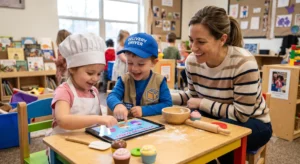
Pretend play creates low-stakes challenges where children can try, fail, and try again without fear. In a pretend grocery store, your child has to remember what’s on the list, match items to pictures, and decide how many coins to “pay.” Each choice practices executive function—the mental toolkit that includes working memory, flexible thinking, and impulse control.
Problem-solving preschool games add structure to that play. Instead of open-ended chaos, they offer a goal: feed the zoo animals, organize toys by color, or help a character find the missing puzzle piece. Your child isn’t just playing house; they’re sorting, sequencing, and reasoning. Over time, these mini-challenges train the brain to hold information, plan steps, and adapt when something doesn’t work.
How Pretend Play Boosts Memory and Focus
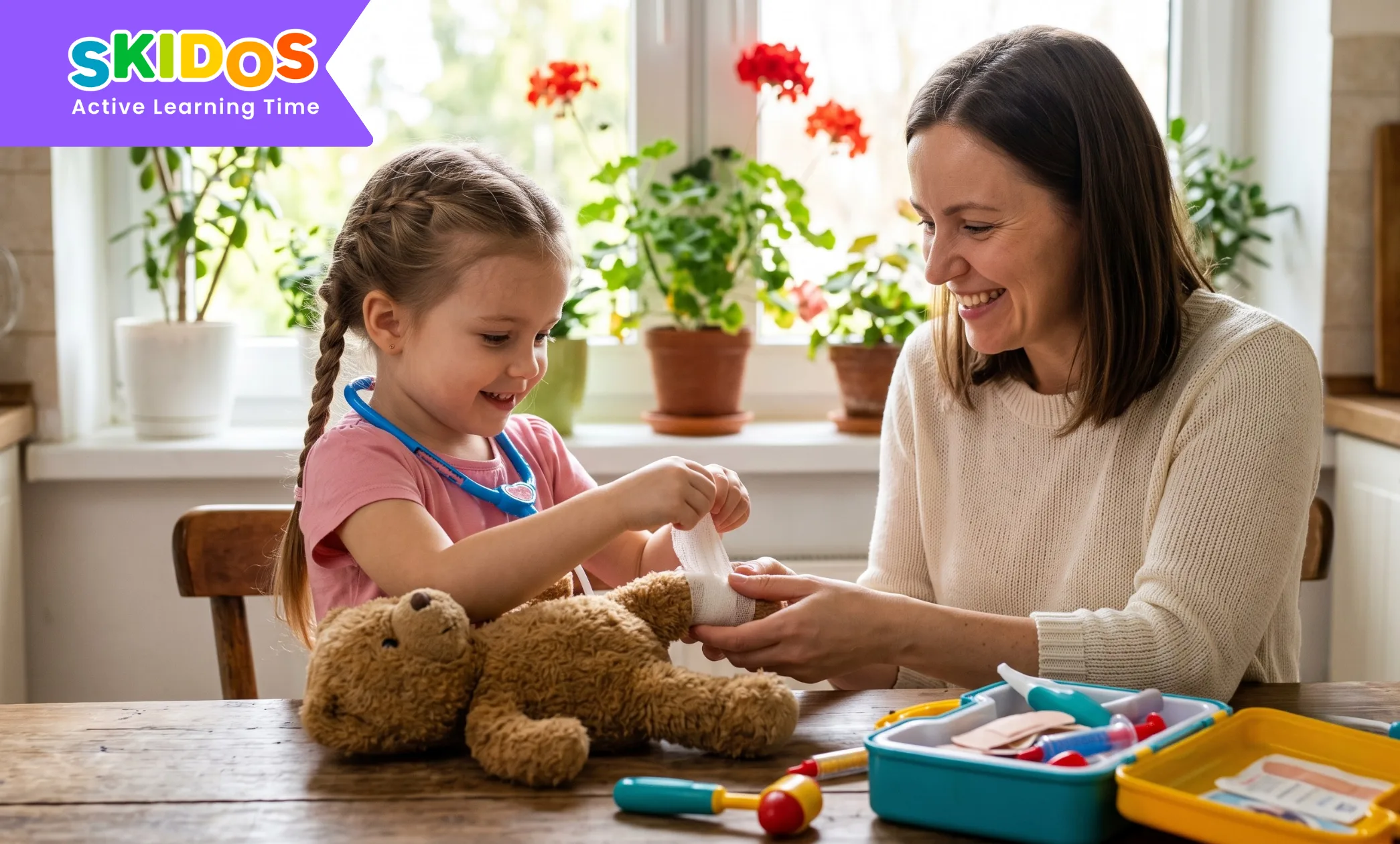
Memory and focus grow stronger with practice, and pretend play gives preschoolers hundreds of tiny reps. When a child role-plays as a doctor, they have to remember which “patient” needs the bandage, what the stethoscope is for, and the order of steps to “check” symptoms. That’s working memory in action.
Teachers report that kids who play these games show better attention during circle time and recall story details more easily. Why? Because pretend play is goal-driven. Your child wants to complete the mission—deliver all the letters, bake the cake, solve the mystery—so they choose to focus. Unlike drills, pretend play games make concentration feel like fun.
These games also nurture cognitive skills (pattern recognition, logic), executive function (planning, self-control), and imagination (creating scenarios, trying different roles). When you see your child stick with a task longer than usual, you’re watching those skills bloom.
SKIDOS Brain Games: Everyday Play That Trains Attention and Memory

Game Scenarios Built Around Memory and Focus
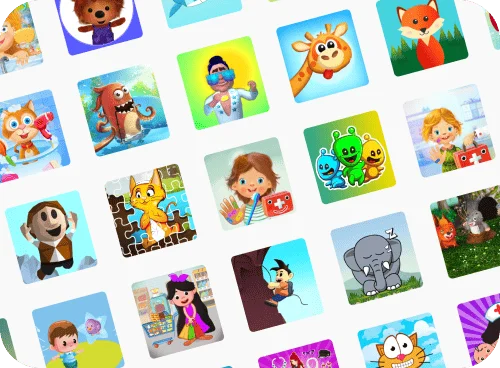
SKIDOS brain games weave memory and focus practice into pretend play scenarios—so learning happens without feeling like a lesson. Your preschooler might help a chef remember ingredient orders, match animal sounds to pictures, or guide a character through a sequence of rooms. Each game is short (perfect for preschool attention spans) and designed to sharpen focus, memory, and thinking skills through fun, purposeful play every day.
Teacher-Tested in Real Classrooms
What makes SKIDOS different is the teacher feedback loop. Preschool educators test these games in classrooms and share what works: which levels hold attention, where kids get stuck, and how the games improve behavior. That feedback shapes updates and new content, so you’re not guessing whether an app is “educational”—you’re choosing games teachers already trust.
Built-In Breaks and Natural Stopping Points
SKIDOS brain games build in natural breaks and encourage short, meaningful sessions. You won’t find endless videos or addictive reward loops. Instead, the games guide your child through a focused activity—five to ten minutes—and then celebrate progress with a clear stopping point. That structure helps preschoolers learn self-regulation: they practice starting a task, staying with it, and wrapping up.
Choosing Pretend Play Apps Parents Can Trust
Not all pretend play apps are equal. Look for games that are teacher-reviewed, age-appropriate, and clear about what skills they target. Here’s what to check:
- Teacher endorsements or classroom use. Apps tested by educators deliver real learning gains.
- Clear skill goals. Does the app say it builds memory, focus, or problem-solving?
- Short, structured sessions. Preschoolers need bite-sized activities with natural stops.
- Parent dashboards. You should see which games your child plays and what skills they practice.
- Safe, ad-free environment. No surprise purchases, no ads, no outside links.
Educational pretend play apps that meet these criteria give you peace of mind. You know screen time is actually skill time—and that the play your child loves is also the practice their brain needs.
FAQs: Helping Your Preschooler with Memory and Focus
How do pretend play games help my preschooler with memory and focus?
They offer engaging routines that strengthen recall and attention. When kids role-play tasks like following a recipe or organizing a shop, they practice holding information and focusing on multi-step challenges in a playful, low-pressure way.
Are these SKIDOS games teacher-approved or reviewed?
Yes, SKIDOS shares real feedback from preschool teachers to inform parents. Educators test the games in classrooms and report which activities improve attention, memory, and problem-solving—so you’re choosing content that’s proven in real learning settings.
What types of skills do pretend play games nurture besides problem-solving?
They also build imagination, self-regulation, language, and social skills. As children take on roles and navigate scenarios, they learn to plan, adapt, express ideas, and understand perspectives—all critical for school readiness.
Will these games keep my child engaged without too much screen time?
The games are designed for short, meaningful play sessions with built-in breaks. SKIDOS brain games guide preschoolers through focused activities that last five to ten minutes, encouraging natural stopping points so screen time stays balanced.
Is it easy to track my child’s progress in these apps?
SKIDOS apps offer simple parent dashboards to monitor skill growth. You can see which games your child plays, how long they engage, and what areas—like memory or focus—they’re practicing, giving you clear insight without guesswork.
How do I select the best pretend play games for my child’s needs?
Look for teacher-reviewed games that highlight focus, memory, and adaptability. Check for transparent skill goals, age-appropriate content, short session lengths, and parent controls—so you know the app matches your child’s stage and your family’s screen-time values.
Start Building Memory and Focus Through Play Today
Memory and focus challenges are real, but the right pretend play games turn practice into play. When you choose activities backed by preschool teacher feedback—like SKIDOS brain games—you’re giving your child tools to strengthen attention, recall, and problem-solving every day. Explore Brain Games for Kids from SKIDOS and discover pretend play scenarios that sharpen focus, memory, and thinking skills through fun, purposeful play your preschooler will love.
Sources & further reading
These reputable organisations offer further, independent guidance on the topics covered above: