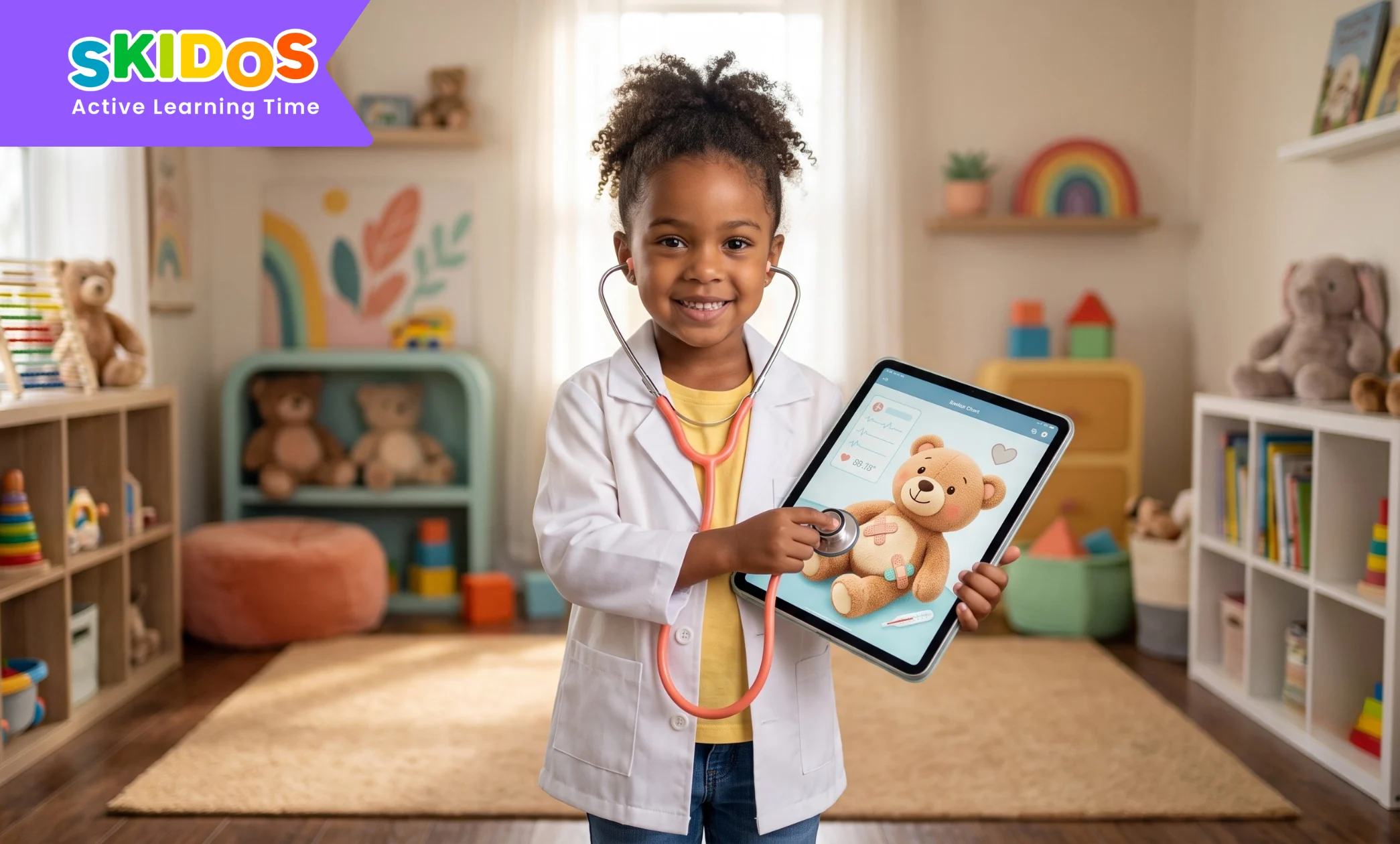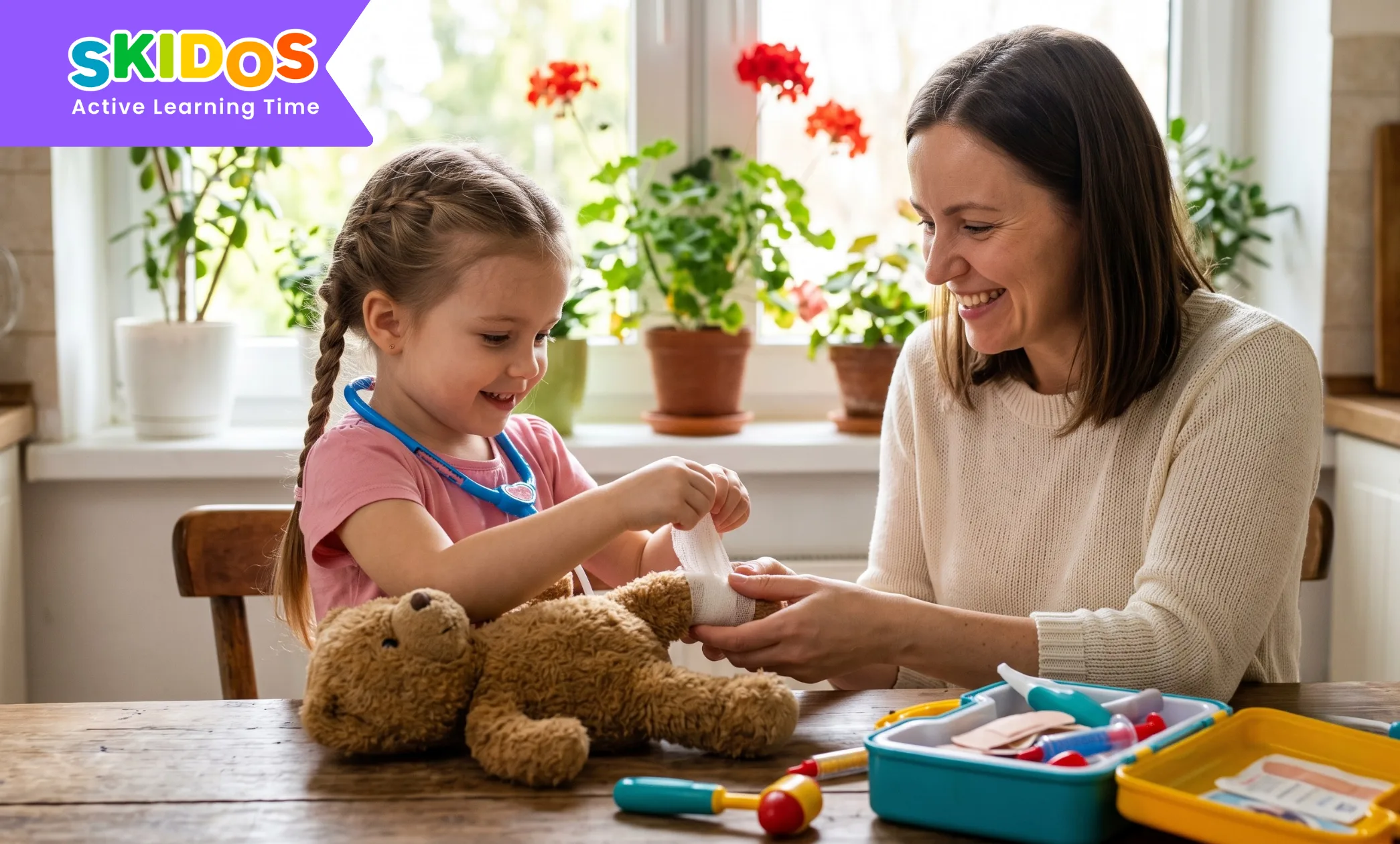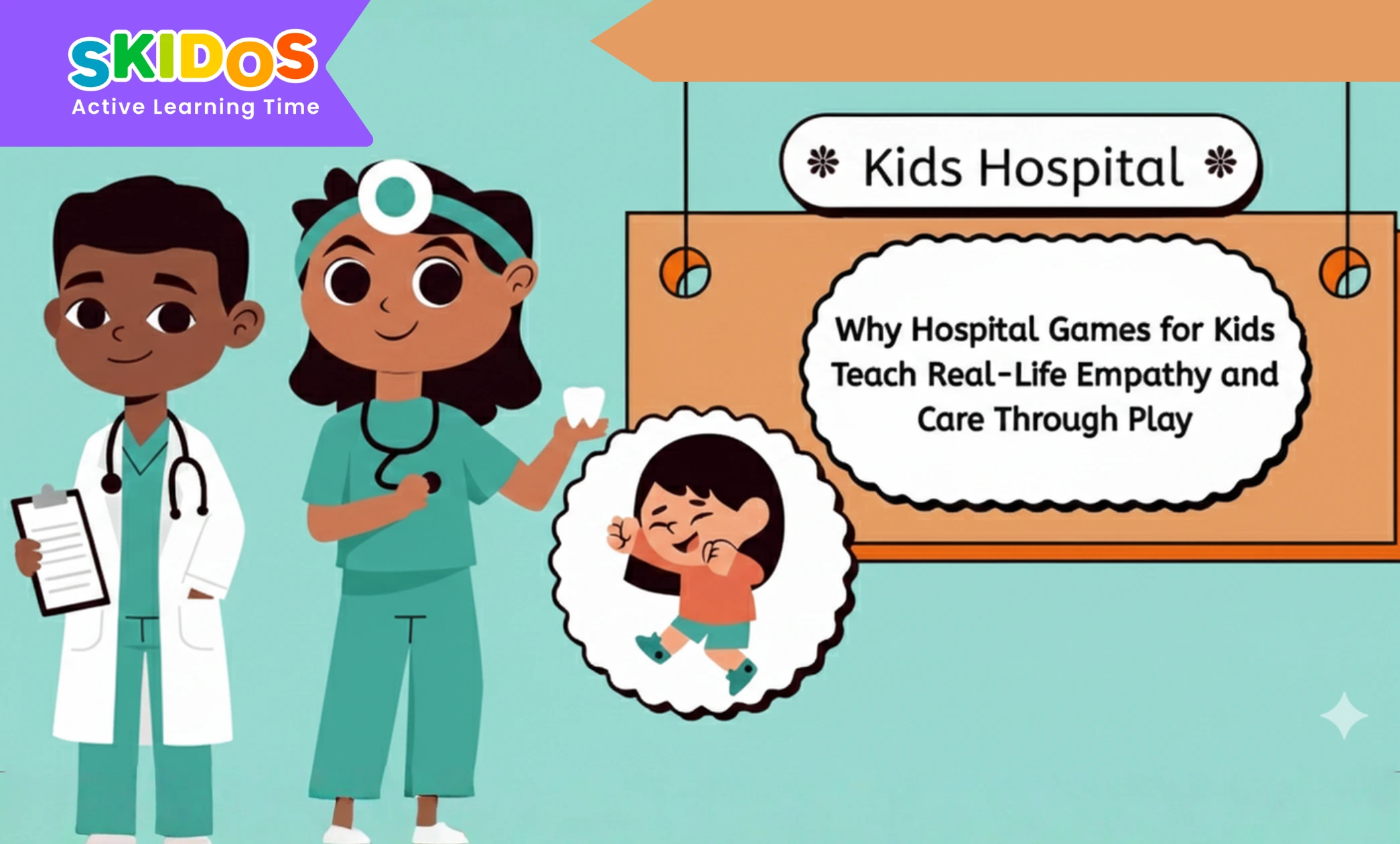
What looks like a simple game about doctors and patients often becomes a lesson in kindness, care, and understanding. For parents who want screen time to feel useful, hospital-themed learning games for kids quietly build emotional and social skills while keeping children engaged.

Why Children Are Naturally Drawn to Hospital Games
Children are curious about adult roles, especially roles that involve helping others. Doctors and nurses represent care, responsibility, and problem-solving. Hospitals may feel confusing or even scary in real life, but games allow kids to explore this world without fear.
Hospital games give children control over situations they usually do not understand. By treating patients and using medical tools, kids replace uncertainty with confidence and curiosity.
Learning Empathy Through Role Play
Empathy is learned through experience, not instructions. Hospital games place children in situations where they must notice how others feel and respond thoughtfully.
When a child comforts a nervous patient or helps someone recover, they practice understanding emotions. Over time, these small actions help kids become more emotionally aware in real life, whether it is with friends, siblings, or classmates.
Understanding Responsibility in a Safe Way
Hospital games also introduce responsibility without pressure. Children are given tasks that matter, but mistakes do not lead to stress or failure.
Kids may need to follow steps, select the right tools, or help a patient recover. Through this process, they learn that being careful and thoughtful leads to better outcomes.
Supporting Early Emotional Development
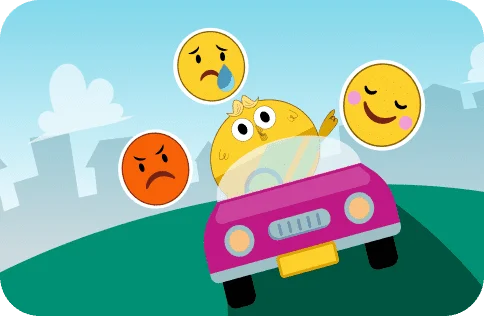
Emotional development begins early and plays a big role in shaping overall personality. Hospital games naturally introduce emotions in a way that kids can understand.
Children may interact with characters who feel nervous, uncomfortable, or relieved after receiving care. By responding to these emotions, kids learn how feelings work and how to react with patience and kindness.
This makes hospital games a valuable part of learning games for kids, especially for parents who want their child’s development to go beyond academics.
Reducing Fear Around Medical Visits
Many children feel anxious about visiting a doctor. Hospital games help reduce this fear by making medical environments familiar.
When kids understand what medical tools do and why doctors ask questions, real-life visits feel less intimidating. The more familiar something feels, the less scary it becomes.
For parents, this can make future doctor visits smoother and less stressful.
Why Hospital Games Belong in Learning Games for Kids
Not all screen time is equal. Games that combine fun with purpose make a real difference. Hospital games offer storytelling, problem-solving, and emotional learning in one experience.
Well-designed hospital games help children learn how to care, think, and respond thoughtfully. At SKIDOS, learning games are designed to support children in more ways than one, and hospital-themed games fit naturally into this approach.
What feels like play today can shape how children understand and care for others tomorrow. That is the quiet power of hospital games for kids.
Frequently Asked Questions (FAQs)
1. How do hospital games for kids help develop empathy?
Hospital games place children in caregiving roles where they must notice emotions and respond kindly. This repeated exposure helps kids understand feelings and practice compassion naturally.
2. Are hospital games suitable for young children?
Yes, age-appropriate hospital games are designed to be simple, friendly, and non-threatening, making them suitable even for preschoolers.
3. Can hospital games reduce the fear of real doctor visits?
Yes. SKIDOS hospital games make medical tools and procedures familiar, which helps reduce anxiety and fear during real hospital or clinic visits.
4. Do hospital games teach real-life skills?
Yes, they teach emotional awareness, responsibility, problem-solving, and helping behavior, which are important real-life skills.
5. How are hospital games different from other learning games for kids?
Unlike many learning games that focus solely on academics, SKIDOS hospital games foster empathy, compassion, and emotional intelligence while delivering a personalized learning experience.
6. Can hospital games improve social behavior in children?
By engaging in caring behaviors within games, children tend to become more patient, supportive, and empathetic in real-life social situations.