For years, the educational game market has been divided. On one side, you have “broccoli apps” that are strictly educational, often boring, and quickly abandoned by kids. On the other side, you have “candy apps”– addictive, high-quality kids’ games with zero educational value.
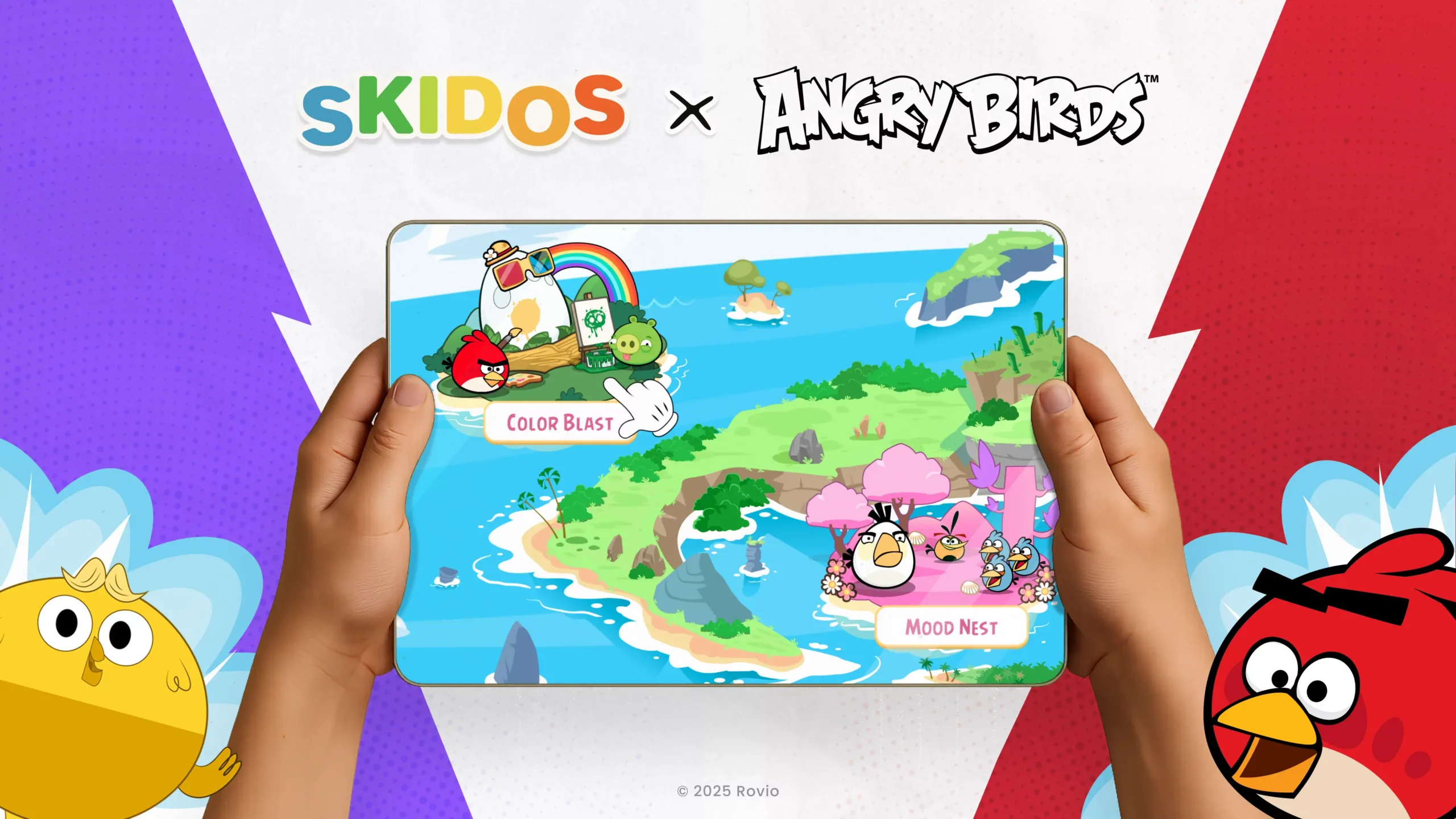
With the release of SKIDOS Angry Birds Play & Learn, that gap is finally being bridged. By partnering with Rovio, SKIDOS has integrated a comprehensive Social-Emotional Learning (SEL) curriculum into the Angry Birds universe. But how does it actually stack up against the titans of the industry?
Here is a deep-dive comparison.
1. The “Cool Factor”: IP Integration vs. The Competition
The first hurdle in any educational game is getting the child to open it voluntarily. This is where the choice of Intellectual Property (IP) matters most.
The Competitor Strategy: (Khan Academy Kids, ABCmouse)
Most competitors create their own “friendly” characters (cute bears, mice, or generic guides). While these are safe and educational, they often lack the “cultural currency” that kids care about. Once a child hits age 5 or 6, they often reject these characters as being “for babies.”
The SKIDOS Angry Birds Play & Learn Advantage:
SKIDOS leverages the massive global appeal of Angry Birds.
Why it wins: Kids don’t view Red, Chuck, and Bomb as “teachers”; they view them as celebrities. By using characters that children naturally want to interact with, the learning game bypasses the initial resistance to “learning time.”
The Difference: While competitors beg for attention, Angry Birds commands it. This is the only educational game where a child can explore complex emotional themes and build emotional well-being using characters they actively see in movies and merchandise.
2. Color Blast Island vs. Disney Coloring World
The Battle for Creativity: Static vs. Dynamic
Color Blast Island is designed to foster artistic expression. But how does it compare to the heavyweight champion, Disney Coloring World?
The Competitor: Disney Coloring World
Disney offers a polished experience with a massive library of characters. However, these coloring games often suffer from two issues:
Static Content: The library rarely changes once you’ve downloaded it.
Limited “Tap-to-Fill”: Many coloring apps restrict children to simple “tap to fill” mechanics, where they can’t mess up the lines, but also can’t truly express themselves.
The SKIDOS Difference:
SKIDOS focuses on Creative Agency and Live Seasonality.
Always Fresh (Seasonal Updates): Unlike competitors that feel the same year-round, Color Blast Island is a living world. It features regularly updated seasonal content– currently featuring a dedicated Christmas season theme, keeping the experience relevant and exciting. This “LiveOps” approach means your child always has something new to look forward to, aligning their digital play with real-world holidays.
True Artist Tools: It isn’t just about filling in a shape. SKIDOS’ coloring app gives the kid control over their toolkit. Kids can select specific brushes (markers, crayons, paints) and choose their own colors. This freedom allows for genuine artistic decision-making, moving from passive consumption to active creation.
Winner: Disney for character volume; SKIDOS for a dynamic, seasonally updated experience that gives kids real artistic tools.
3. Mood Nest Island vs. Daniel Tiger’s Grr-ific Feelings
The Battle for Social-Emotional Learning (SEL)
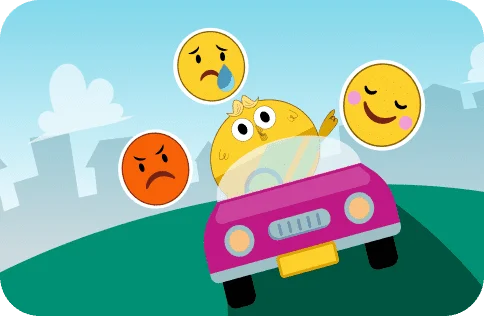
Mood Nest Island is the heart of this educational game, focusing on identifying and managing emotional well-being. Its direct rival is the gold standard of SEL: Daniel Tiger (PBS KIDS).
The Competitor: Daniel Tiger
Daniel Tiger uses a gentle, musical approach to teaching feelings. It is soft, slow, and perfect for toddlers (ages 2-4). The conflict resolution is often passive– listening to a kid’s song or watching a story unfold.
The SKIDOS Difference:
SKIDOS takes a bold approach: “Edgy” Empathy.
Realism vs. Perfection: Daniel Tiger is always polite. The Angry Birds are…well, angry. They get frustrated, hyperactive, and sad.
Why it wins for older kids: A 6-year-old relates more to Red’s frustration than Daniel’s gentle songs. Mood Nest allows kids to navigate imperfect emotional states. They learn that feeling angry is okay, and they actively help the characters resolve these “big feelings.”
Active Roleplay: Instead of just watching, the child interacts with the birds to solve the emotional puzzle, turning empathy into an active gameplay mechanic.
Winner: Daniel Tiger for toddlers; SKIDOS for ages 4-8 who need realistic, relatable social-emotional learning.
4. The SKIDOS Advantage: An Ecosystem for Every Child
While Angry Birds Play & Learn is the hook, the real value lies in the platform behind it. Most competitors are just “educational games”– SKIDOS is a comprehensive Learning Ecosystem designed for accessibility and inclusion.
Inclusivity by Design (Neurodiverse-Friendly)
This is SKIDOS’ most significant differentiator. While most learning games are “one size fits all,” SKIDOS is built to make learning accessible for every child, including those with neurodivergent needs.
Tailored Accessibility: Through expert collaboration and strict accessibility guidelines, the platform creates a safe space for learners with ADHD, dyslexia, and other unique needs.
The Promise: It isn’t just about entertainment; it’s about turning screen time into measurable skill development for children who might struggle with traditional, rigid learning methods.
Holistic Growth: Beyond Just “Math Games”
Competitors often focus on one thing (just reading or just logic). SKIDOS delivers a Holistic Growth Model that targets the whole child:
Core Academics: It strengthens the foundations– Math, Phonics, Reading, and Tracing, ensuring school readiness.
21st-Century Life Skills: It goes beyond the classroom by developing Motor Skills, Cognitive Function, Creativity, and Social-Emotional Learning (SEL) through play.
A Universe Kids Actually Love
You can have the best curriculum in the world, but if the kids’ game is boring, it doesn’t matter.
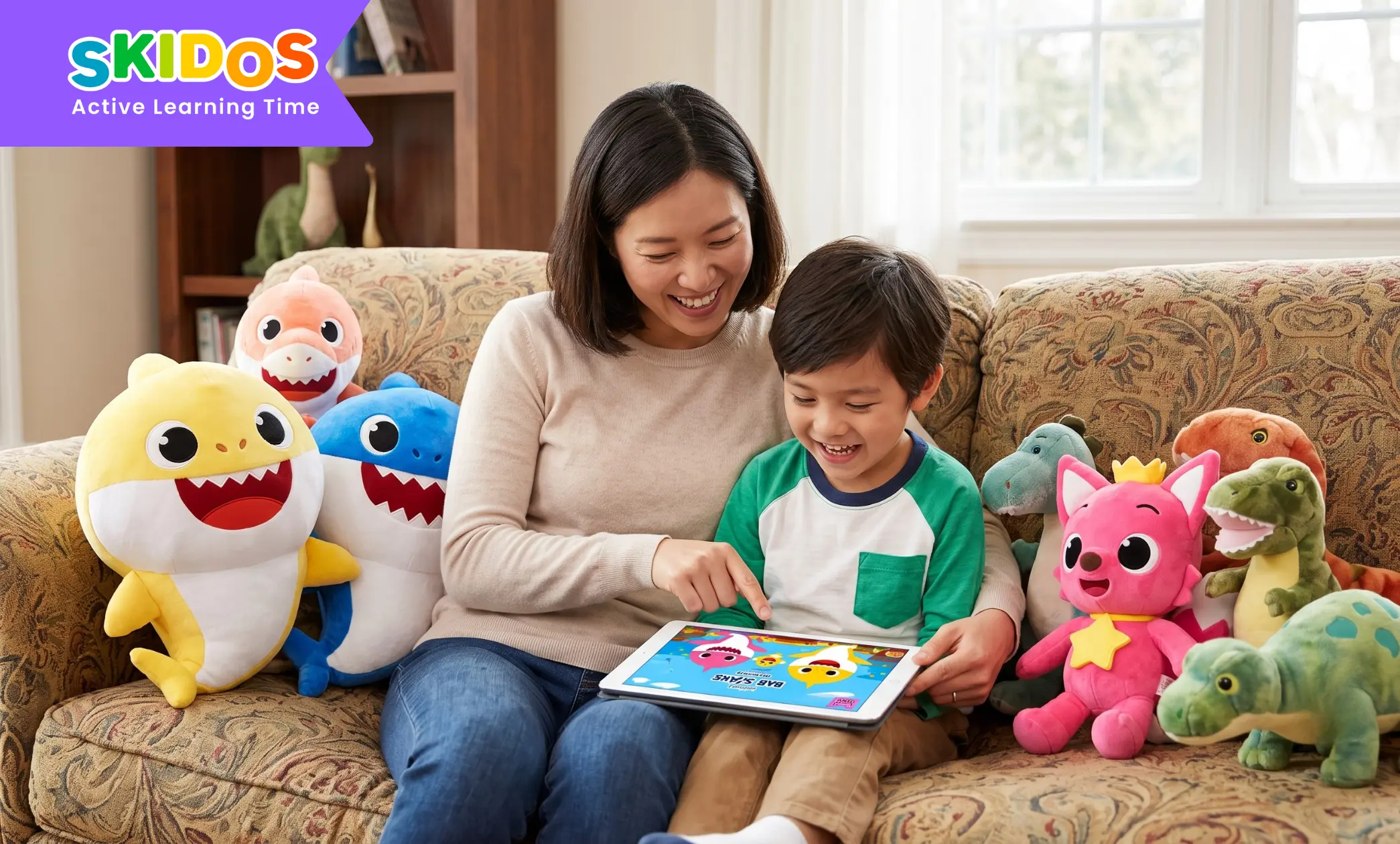
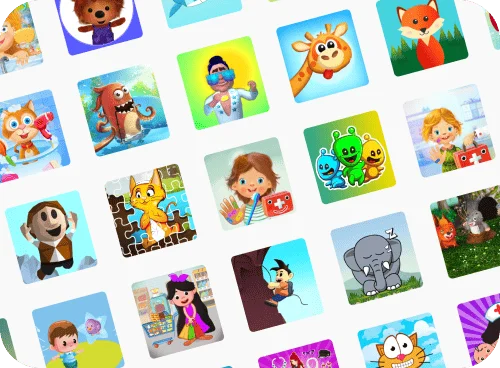
Top-tier collaborations: With SKIDOS’ premium access to 50+ educational games, including massive global hits like The Smurfs and Pinkfong Baby Shark, with more titles arriving soon.
The Benefit: You aren’t forcing your child to “study”; you are letting them play in a universe they already love, while the learning happens naturally in the background.
Safety & Trust (Peace of Mind)
Certified Safe: In an online world full of risks, SKIDOS is a sanctuary. It is COPPA & GDPR compliant, ensuring your child’s data is protected.
Anywhere Access: With offline availability, learning doesn’t stop when the Wi-Fi does, perfect for car rides and travel.
The Verdict:
SKIDOS promises to blend play, creativity, and learning to empower children to grow with confidence, curiosity, and joy. By combining the star power of Angry Birds with a neuro-inclusive, academically rigorous platform, it offers a value proposition that no single standalone educational game can match.