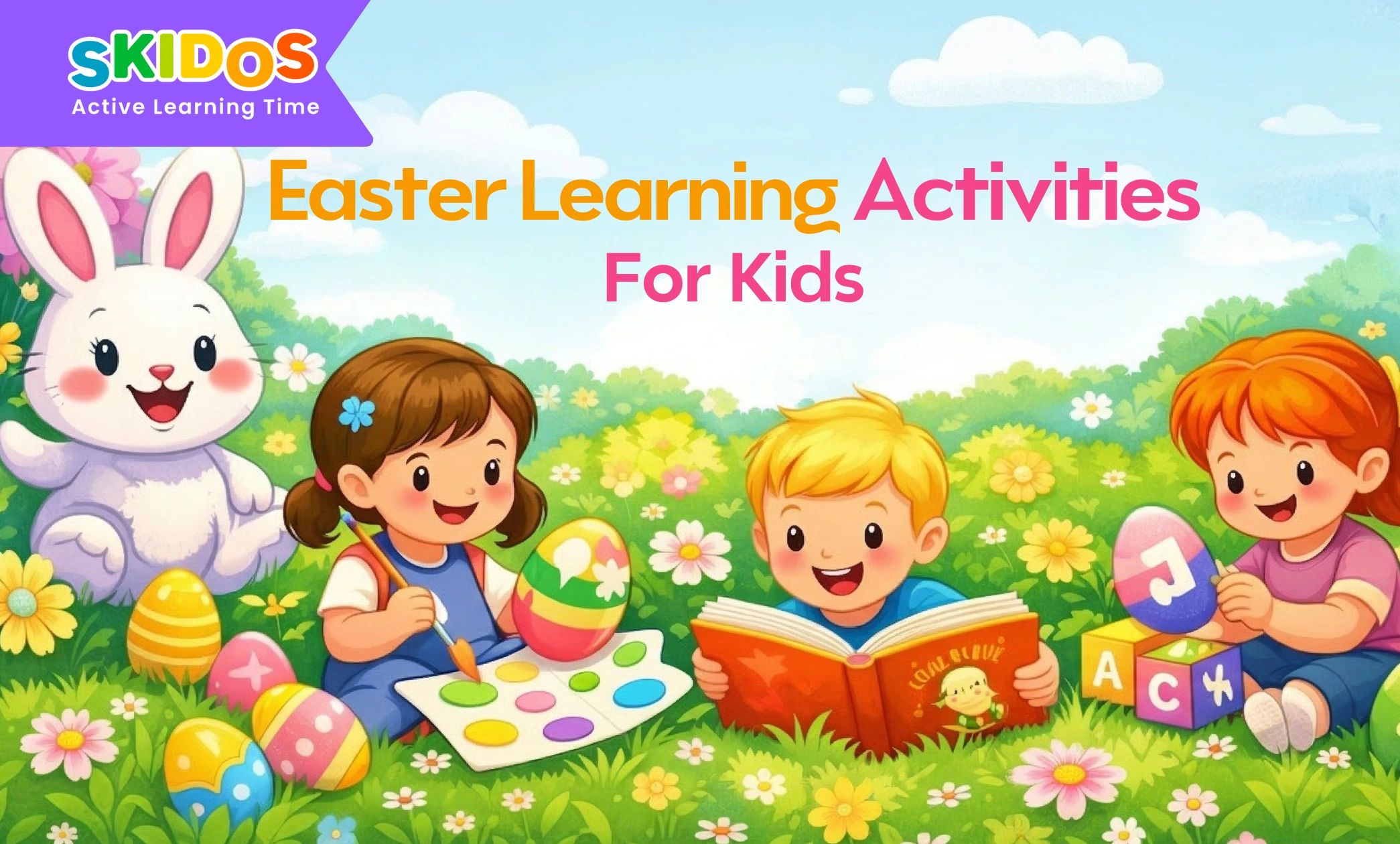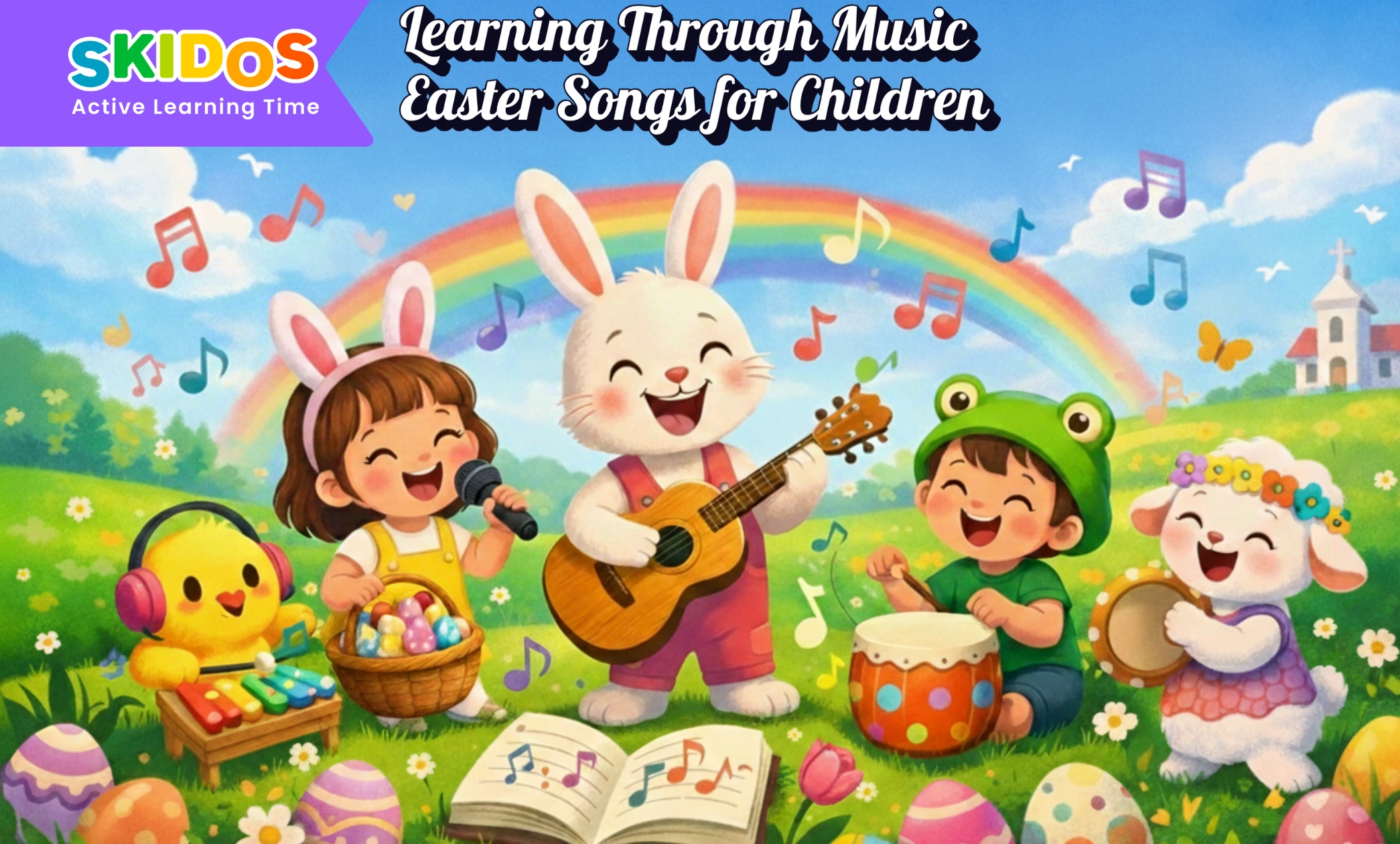
Easter songs for children are more than cute seasonal tunes. They are simple, rhythmic, and repetitive, which makes them a wonderful tool for helping young kids develop language, memory, and listening skills. When paired with play-based activities and learning games for kids, these songs can quietly support early development, without children ever feeling like they’re “studying.”
Why Music Works So Well for Young Learners
If you’ve ever noticed your child remembering a song lyric after hearing it just once, you’ve already seen the magic of music in action. Music activates multiple parts of the brain at the same time.
Songs help children:
- Pick up new words naturally
- Improve pronunciation and sentence flow
- Strengthen memory through repetition
- Understand patterns, rhymes, and sequencing
This is why Easter songs for children are especially effective. They often use simple vocabulary, repeated phrases, and playful storytelling, perfect for early language learners.
From Songs to Play: Learning Games for Kids
Music becomes even more impactful when it’s paired with play. That’s where learning games for kids come in. When songs inspire action, imagination, or problem-solving, children stay engaged longer and learn more deeply.
For example:
- After singing an Easter song about counting eggs, kids can play a simple counting game
- A song about colors can lead to a matching activity
- A bunny-themed song can inspire a pretend rescue or adventure game
These playful connections help children apply what they hear in songs to real thinking skills, like counting, sorting, and remembering steps.
A Gentle Reminder: Learning Should Feel Like Joy
Easter is about celebration, warmth, and togetherness, and learning doesn’t have to be separate from that. Through Easter songs for children, kids can build language skills, strengthen memory, and grow confidence, all while laughing and singing.
When music, play, and thoughtful learning games for kids come together, something special happens. Children don’t just learn, they enjoy learning. And that’s a feeling that stays with them long after the holiday ends.
Ready to start singing?
Check out our curated list of 30+ Easter Songs for Kids to find the perfect tunes for your preschooler or kindergartner!
Frequently Asked Questions
How do Easter songs help my child learn?
Easter songs help children learn by strengthening language, memory, and listening skills. Repetitive lyrics and simple rhythms make it easier for kids to remember words, understand sentence flow, and build early vocabulary, all while having fun.
At what age can children benefit from Easter songs?
Children as young as toddlers can benefit from Easter songs. Simple melodies and repeated phrases are especially helpful for ages 2–6, when language development and memory skills grow rapidly through sound and repetition.
Can Easter songs really improve my child’s memory?
Yes. Music supports memory by using rhythm and repetition. When children sing the same Easter songs regularly, their brains practice recalling words, patterns, and sequences, which helps strengthen both short-term and long-term memory.
How can parents turn Easter songs into learning activities?
Parents can turn Easter songs into learning activities by asking children to repeat lyrics, identify words, count objects mentioned in songs, or act out movements. Pairing songs with learning games for kids makes learning more interactive and engaging.
Are learning games for kids better than passive screen time?
Learning games for kids are more beneficial than passive screen time because they encourage interaction, thinking, and problem-solving. When games include music and songs, children stay engaged while building skills like language, focus, and early math.
How much time should my child spend on music-based learning games?
Short, regular sessions work best. Around 15–30 minutes a day of music-based learning games or songs is enough to support learning without overwhelming young children, especially when balanced with offline play and family time.