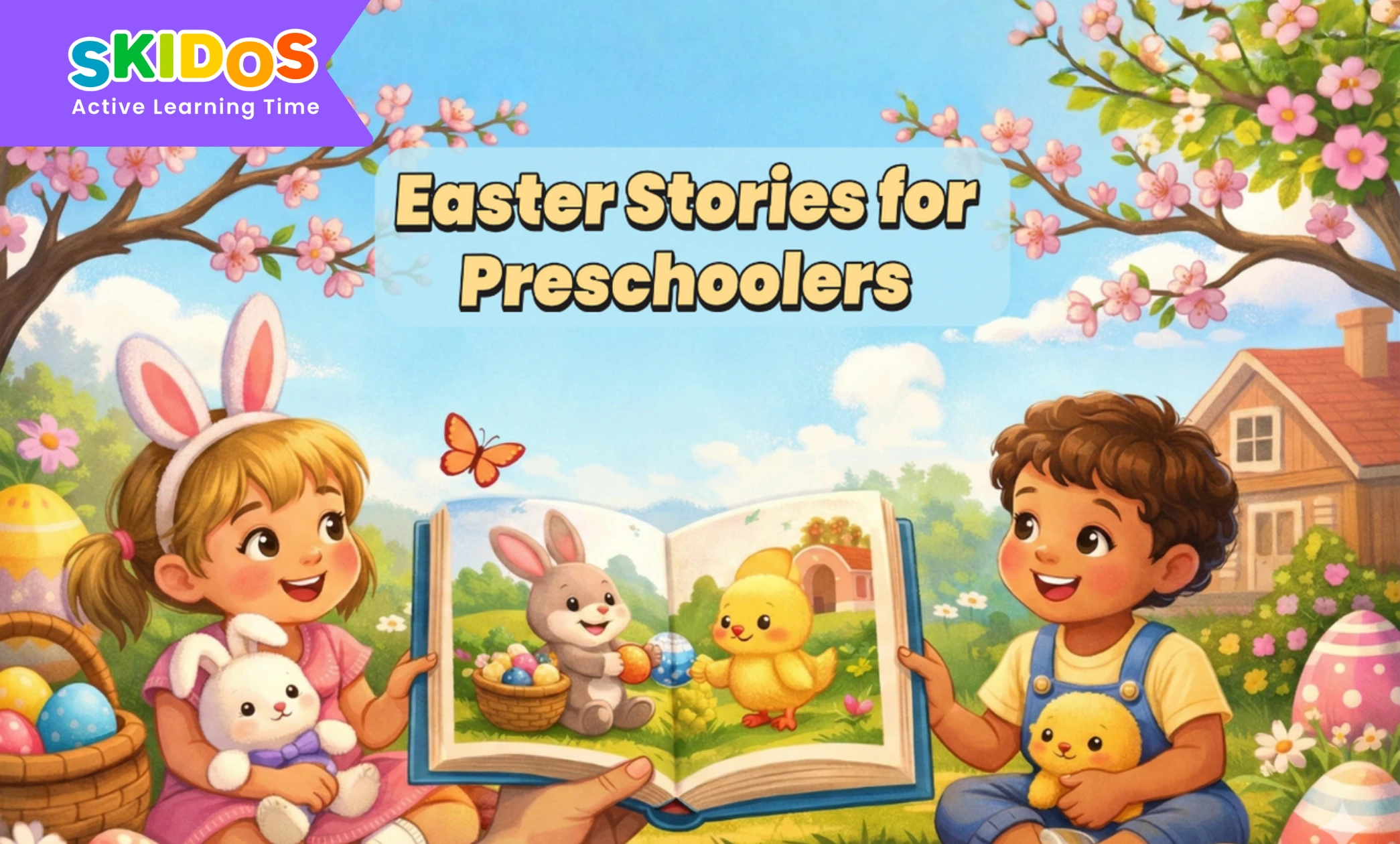
At ages three to five, children learn best through stories. They relate to characters who feel shy, excited, confused, or proud, because those emotions mirror their own world. That’s why Easter stories for kids often focus on simple themes like sharing, helping a friend, waiting patiently, or trying again. These ideas land naturally when wrapped inside a springtime adventure.
Why Easter stories matter for young children
Preschoolers are still learning how to name emotions and understand how actions affect others. Easter stories often revolve around gentle conflicts and happy resolutions. A bunny learning to share eggs, a chick feeling nervous about trying something new, or friends working together for an Easter surprise– all of these moments quietly teach empathy.
When children listen to or retell Easter stories, they imagine what characters feel and why. This builds emotional awareness without needing direct instruction. Parents often notice kids saying things like, “He feels sad,” or “She helped her friend,” which are early signs of emotional intelligence developing.
How imagination grows through Easter storytelling
Imagination thrives when stories feel open-ended. Easter stories for preschoolers usually include playful elements, talking animals, spring gardens, and hidden surprises that invite children to picture the scene in their own way. This kind of imaginative thinking supports creativity, language development, and problem-solving.
After a story, children often continue the experience through play. They might pretend to be the Easter Bunny, create their own endings, or draw scenes from the story. These moments are just as important as the story itself, because they help children process ideas through action.
Emotional skills hidden inside simple stories
What makes Easter stories so effective is their emotional simplicity. Preschoolers don’t need big lessons. They need relatable moments. Stories where characters feel excited before an egg hunt, disappointed when plans change, or happy after helping someone reflect real childhood emotions.
By seeing characters handle these feelings, children learn that emotions are normal and manageable. Over time, this helps build patience, confidence, and kindness, skills that matter far beyond Easter.
📚 Need some stories to read right now? If you’re looking for specific tales to share with your little one today, explore our collection of 30+ short Easter stories for kids. From brave bunnies to spring adventures, there’s a story for every mood!
Connecting stories with playful learning
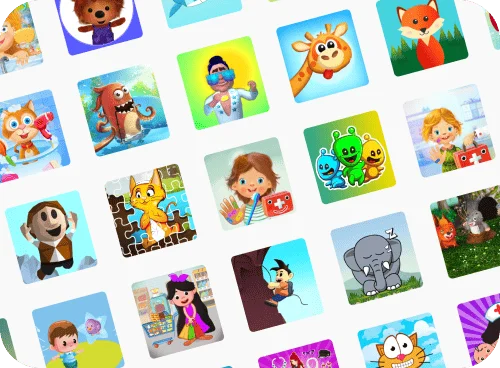
Many families extend Easter stories into playful activities like drawing, role-play, or simple games. Story-based learning experiences, including those found in SKIDOS, use this same idea. Familiar characters, gentle challenges, and short narratives help children learn through curiosity rather than pressure.
When learning feels like a story, children stay engaged longer and absorb concepts more naturally. Whether it’s understanding emotions, following sequences, or expressing creativity, storytelling creates a strong foundation for early learning.
Making Easter stories part of everyday moments
You don’t need a long reading session to make an impact. Even a short Easter story before bedtime, during quiet time, or after play can spark meaningful conversations. Asking simple questions like, “How do you think the bunny felt?” or “What would you do?” helps children reflect and connect.
These small moments add up. Over time, Easter stories become more than seasonal fun; they become tools that support imagination, emotional growth, and confident expression in young children.
Frequently Asked Questions (FAQs)
Why are Easter stories especially good for preschoolers?
Easter stories use simple language, gentle emotions, and familiar situations that preschoolers can easily relate to. This helps young children understand feelings and social behavior without feeling overwhelmed.
How do Easter stories help build emotional skills?
Through characters and situations, children learn to recognize emotions like happiness, disappointment, and kindness. Seeing how characters respond teaches empathy and emotional awareness naturally.
Can Easter stories improve creativity and imagination?
Yes. Easter stories often include playful characters and imaginative settings, encouraging children to visualize scenes, invent new endings, and continue the story through play or art.
How can parents make Easter stories more interactive?
Parents can ask open-ended questions, encourage role-play, or invite children to draw scenes from the story. These activities help children think more deeply and express themselves.
How do learning games connect with storytelling for kids?
Story-based learning games, like those offered by SKIDOS, use short narratives and characters to make learning feel familiar and engaging. This helps children learn concepts through play and imagination.
Are learning games useful alongside reading Easter stories?
Yes. When used thoughtfully, learning games can reinforce ideas from stories, such as emotions, problem-solving, and creativity, by allowing children to interact with similar themes in a playful way.