The “I Do It” Phase: Why Responsibility Matters
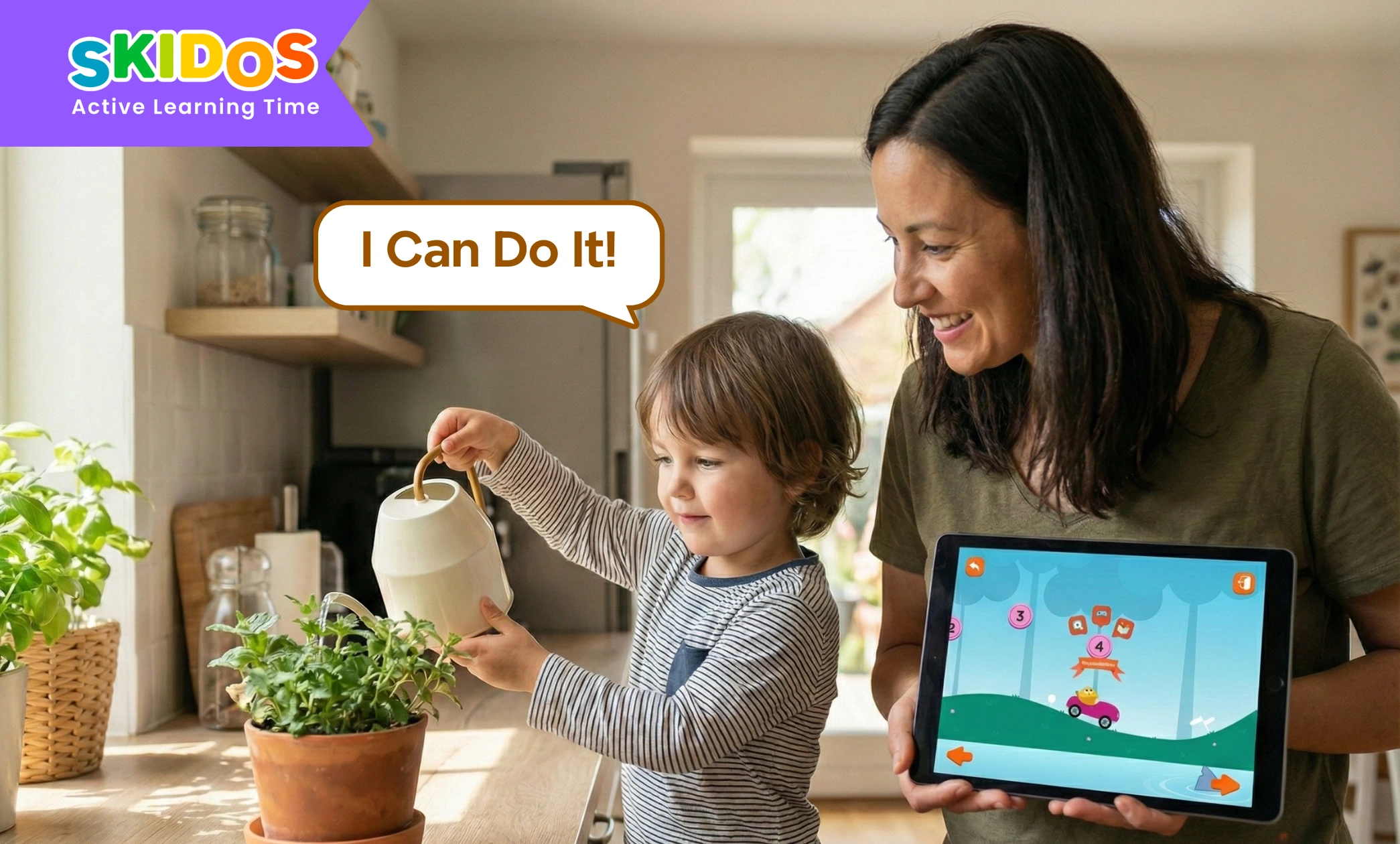
Every parent knows the “I do it!” phase. Whether it’s insisting on buckling their own car seat when you’re 10 minutes late or trying to pour their own milk, it can be a major source of daily power struggles. However, this phase is a massive milestone in a child’s development.
It is the moment a child realizes they are an independent person with the power to affect the world around them. Responsibility, in the context of self-awareness, is about building a child’s agency. When a child learns to take ownership of small tasks, they aren’t just being “helpful”; they are building the core belief that they are capable and independent. This confidence becomes the foundation for how they handle challenges later in life.
The SKIDOS Solution: Our Emotional Wellbeing Learning Module
To help parents move away from “nagging” and toward “empowerment,” we’ve integrated responsibility into our Self-Awareness Island under the Emotional Wellbeing learning module. We guide children through three distinct learning stages:
- Fun Animation: Children are natural mimics. Through engaging animations on Self-Awareness Island, they see characters taking care of themselves and their environment. Watching a character navigate a task helps kids visualize themselves in that “helper” role, shifting the perspective from a boring chore to a positive identity.
- Interactive Activities: Inside the SKIDOS app, kids practice autonomy in a low-stakes environment. Our interactive activities focus on sequencing and decision-making. Because it’s a game, they can try, fail, and try again until they succeed, building the “mental muscle memory” of follow-through without any real-world pressure or parental hovering.
- Storytime: The journey concludes with reflection. Through our Storytime content, we help children identify the “internal glow” of accomplishment. By reading about characters who take ownership, children learn to recognize the pride and satisfaction that come from contributing to their “team,” whether that’s at home or in the classroom.
How to Explore Responsibilities with SKIDOS
You don’t have to be an SEL expert to raise an emotionally intelligent child. You just need the right tools.
- In the SKIDOS Learning App: Dive into Self-Awareness Island inside the “Emotional Wellbeing” module to access the Fun Animations, Interactive Activities, and the Storytime PDFs all in one place.
- On Teachers Pay Teachers (TPT): Looking for classroom resources or physical printables? Download our Responsibility & Teamwork Activities to take the lessons completely offline with guided activities.
- On YouTube: Watch the Fun Animations to introduce these concepts to your child during your next family screen-time session.
Frequently Asked Questions
At what age can I start teaching responsibility?
As soon as they show interest in “doing it myself!” For toddlers, this means simple tasks like putting a laundry item in the basket. It focuses on developing the habit of participation from the very beginning.
How do I handle it when my child refuses to help?
Usually, refusal is a bid for control. Offer “micro-choices” like, “Do you want to pick up the red blocks or the blue ones first?” This turns a demand into a decision, which often ends the power struggle.
Should I use a reward chart for every task?
While sticker charts can help with new habits, the goal of our module is to build intrinsic motivation. We want kids to feel good because they are capable, not just because they want a prize.
What if they make a mess while trying to “help”?
Messes are just part of the learning process! Treat the cleanup as a shared responsibility. Say, “Oops, let’s grab the towel together.” This teaches them that being responsible includes fixing mistakes, too.
Looking for more ways to support your child’s growth? Check out our previous guide on Turning Meltdowns into Learning: Navigating Kids’ Big Emotions.